Cook-Line Exteriors
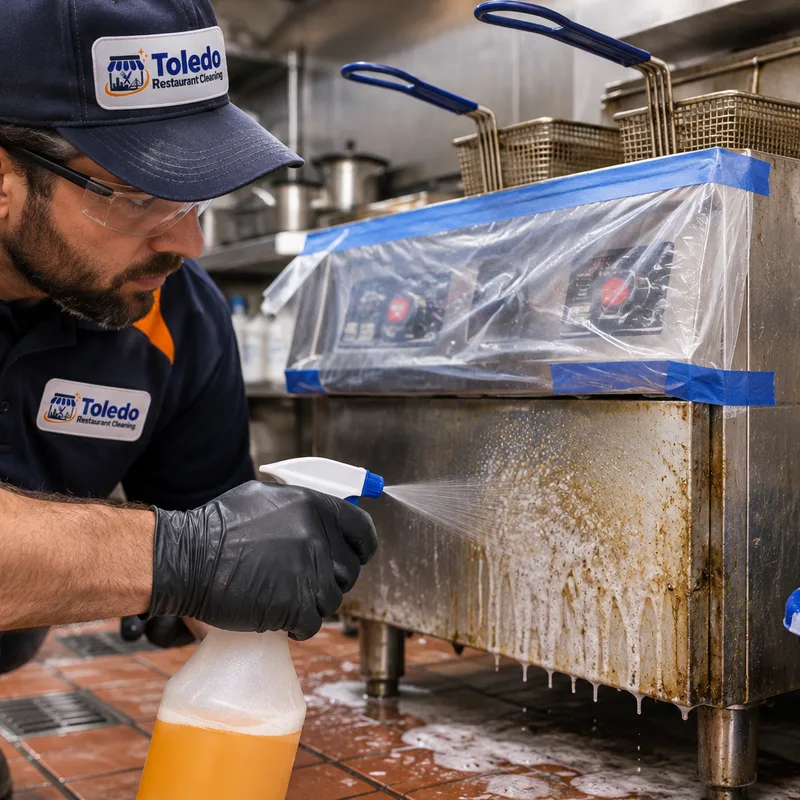
Degreasing targets accessible fryer sides, range exteriors, equipment frames, handles, legs, and casters after surfaces are cooled and prepared.
Serving Toledo, Ohio & surrounding areas
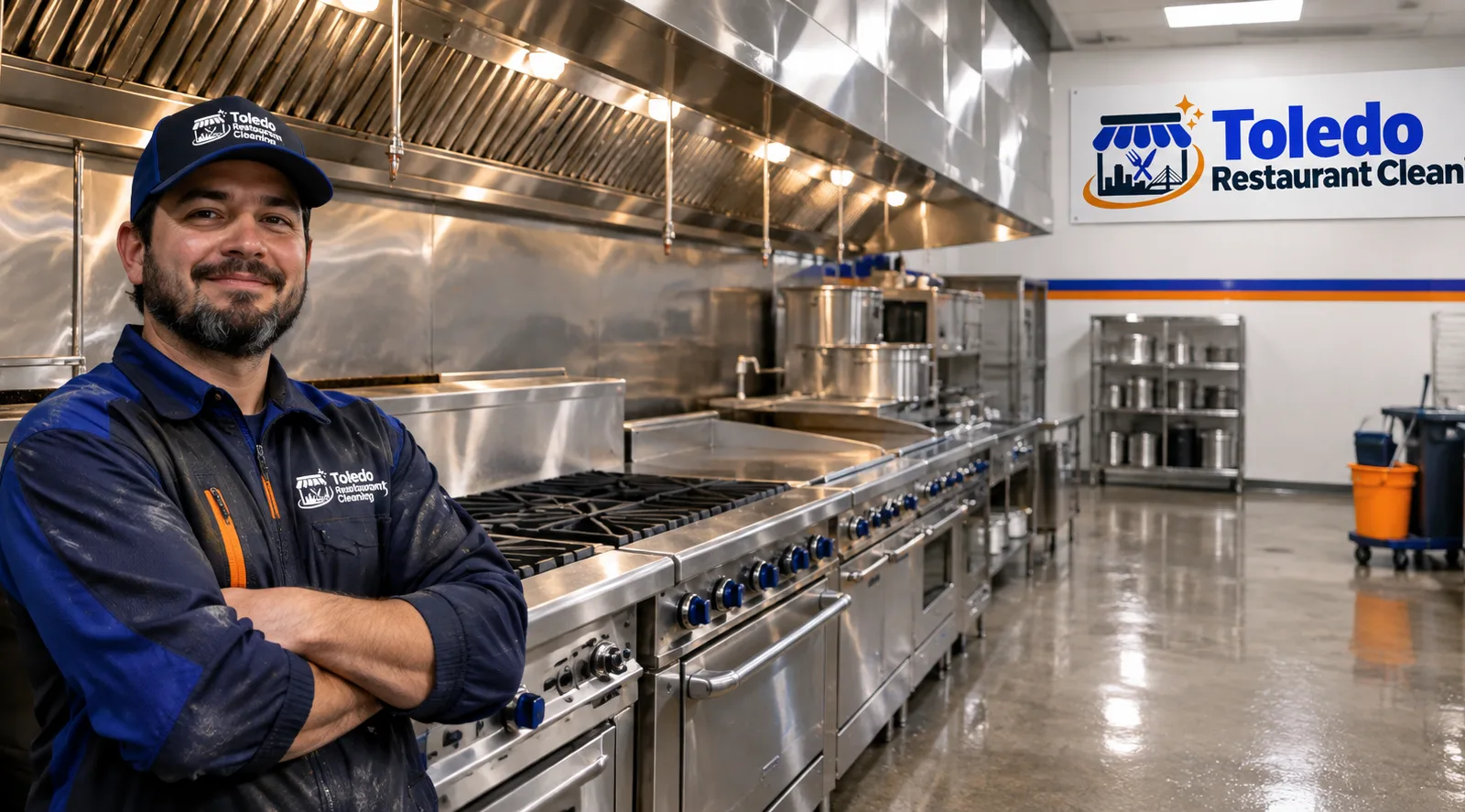
Kitchen Deep Cleaning · Bowling Green, Ohio
Remove cooked-on grease, food residue, and floor buildup with a detailed cleaning plan built around your equipment, operating hours, and problem areas.
Restaurant Kitchen Deep Cleaning Bowling Green operators need goes beyond routine wiping and mopping. Heat turns airborne grease into a sticky film that settles on equipment sides, walls, pipes, shelving, and hard-to-reach floor edges. Spills and food particles also collect under movable equipment and around casters. A deep clean addresses this accumulated soil with commercial degreasers, controlled agitation, dwell time, and thorough rinsing.
Toledo Restaurant Cleaning plans the work around the kitchen's layout, current condition, and operating schedule. Our work as an experienced restaurant team in Toledo, OH allows us to coordinate cleaning for Bowling Green facilities while keeping the scope focused on the areas that need attention. Before cleaning begins, we identify sensitive surfaces, access limitations, movable equipment, utility connections, floor drains, and zones that require extra grease removal.
Bowling Green has restaurants serving downtown customers, Bowling Green State University traffic, and travelers near the Interstate 75 corridor. These settings can produce very different cleaning windows. A late-night kitchen may need work after closing, while a campus-area operation may prefer service during a slower period or academic break. The cleaning plan should fit the facility rather than interrupt prep or meal service.
A written scope may include cooking-line exteriors, stainless steel work surfaces, equipment legs and casters, shelving, wall protection, baseboards, floor edges, and accessible spaces beneath equipment. Degreasing may also be appropriate for washable doors, utility areas, and splash zones where residue has built up. Each material is checked before chemicals are applied because stainless steel, painted surfaces, aluminum, tile, grout, and resilient flooring do not all tolerate the same product or scrubbing method.
Cleaning around fryers and ranges requires special care. Equipment must be cool, stable, and safe to approach. If a unit can be moved without disturbing rigid utility connections, the exposed floor and wall area can be cleaned. Gas lines, electrical components, pilots, controls, and inaccessible internal parts are not treated like ordinary washable surfaces. The scope should state which equipment will move and who is responsible for disconnecting or reconnecting it.
This work concerns accessible kitchen surfaces and floors. Exhaust-system cleaning, pest treatment, equipment repair, and drain repair are separate specialties. If heavy residue extends into inaccessible ductwork or a mechanical component, the appropriate specialist should handle that part.
Included Work
Degreasing targets accessible fryer sides, range exteriors, equipment frames, handles, legs, and casters after surfaces are cooled and prepared.
Mechanical agitation loosens compacted soil around walls, beneath movable equipment, and in grout lines. Wastewater is recovered or directed only to approved sanitary drains.
Washable wall panels, tile, and base areas receive surface-appropriate treatment to remove grease film and splatter without damaging finishes.
Cleared worktables, shelving exteriors, and accessible storage-zone surfaces can be cleaned after food, utensils, and loose supplies are removed or protected.
Kitchen doors, push plates, handles, and washable high-contact areas can be included where soil has accumulated during daily operations.
Accessible mop, service, and interior waste-handling areas may be added to the scope when grease or organic residue requires more than routine cleaning.
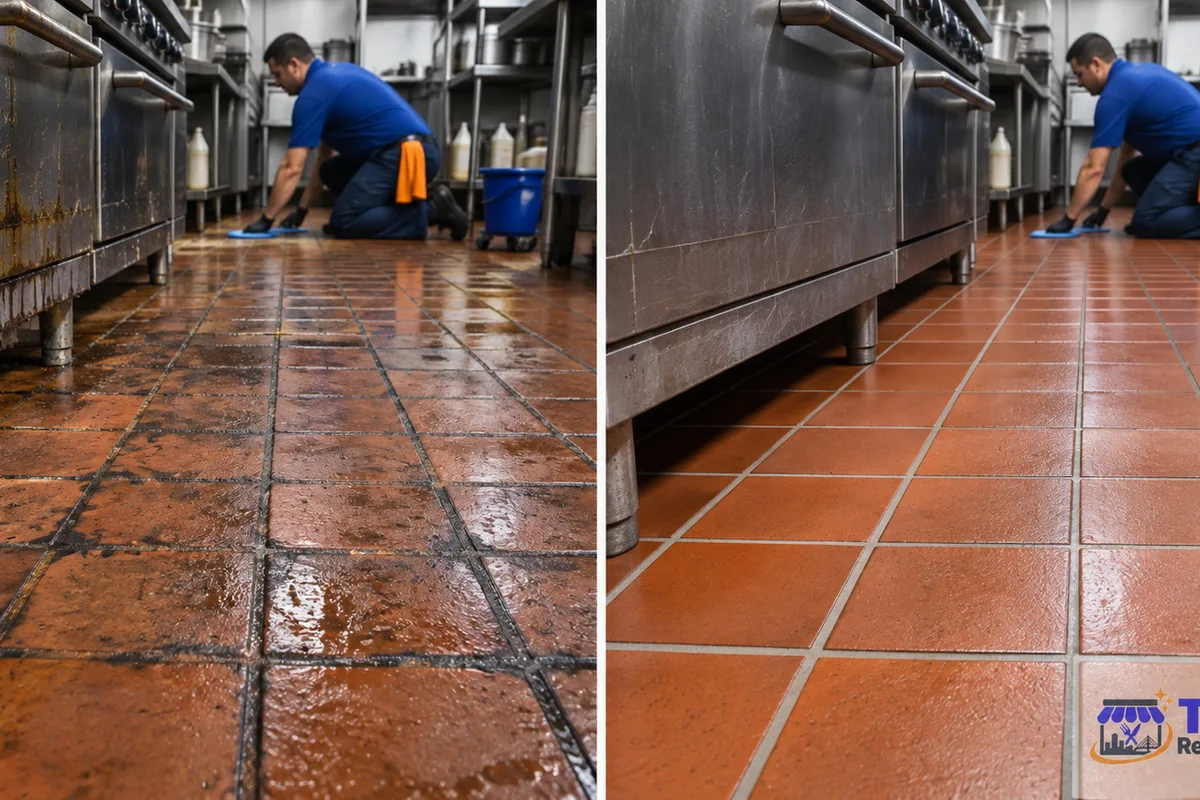
Restaurant Floor Cleaning Bowling Green kitchens need starts with identifying both the floor material and the soil. Quarry tile and grout often hold greasy residue in joints and textured surfaces. Sealed concrete, ceramic tile, and resilient flooring require different pads, brushes, chemistry, and water control. Using a product that is too aggressive can dull a finish or affect grout, while a weak product may spread grease instead of lifting it.
The usual method is dry soil removal, degreaser application, proper dwell time, agitation, and recovery of the loosened residue. Edges, corners, and spaces around fixed legs often need hand detailing. Floors are rinsed as needed so detergent residue does not remain underfoot. They must then be left as dry as practical before the area returns to service.
Bowling Green's winter weather can add tracked moisture, salt, and grit near receiving doors and employee entrances. Those abrasive particles should be removed before wet scrubbing. Otherwise, they can remain in grout lines or be dragged farther into the kitchen. Floor work should also protect food storage, keep chemicals away from ingredients, and prevent cleaning water from reaching electrical equipment or unapproved exterior drains.
Service Workflow
We review the cooking line, floors, wall surfaces, access points, drains, equipment mobility, and residue level. This establishes realistic priorities and identifies surfaces that require testing.
The plan states which areas are included, what the restaurant must clear, whether equipment can move, and when the kitchen will be available. Scheduling accounts for cooling time and the reopening window.
Food, utensils, disposables, and loose items are removed or protected. Sensitive controls, outlets, and non-washable areas are kept away from spray and cleaning solution.
Suitable chemistry is applied at the correct dilution and allowed to dwell. Brushes, pads, and other tools break up adhered grease without using unnecessary abrasion.
Loosened soil and cleaning residue are removed. Crews detail edges, legs, casters, and other included areas, then leave floors as dry as practical for safe turnover.
The cleaned areas are checked against the agreed scope. Any access restriction or condition that could not be corrected through cleaning is documented for the operator.
Restaurant kitchen deep cleaning in Bowling Green typically costs about $500 to $2,500, while large kitchens, severe grease accumulation, or multi-zone work may cost more. A smaller floor-focused visit is generally at the lower end; a full cook-line, wall, equipment-exterior, and floor cleaning falls higher.
Final pricing depends on square footage, grease level, floor material, equipment access, required labor, water availability, and the time window. Moving equipment or dividing work across visits can also affect the quote. The exact cost is confirmed after an on-site assessment and written scope.
Clear Expectations
A reliable quote should define more than the kitchen's square footage. Two kitchens of similar size can require very different labor when one has open access and routine maintenance while the other has tightly spaced equipment and hardened residue. Photos can help with preliminary planning, but an on-site review is the better way to identify access issues and confirm what can be cleaned safely.
Before the appointment, operators should plan for cooling and shutdown requirements, remove food and smallwares from included areas, and identify equipment that staff may move. The restaurant should also disclose damaged flooring, loose grout, unstable casters, active leaks, or electrical concerns. Cleaning can remove soil, but it cannot repair failed finishes or unsafe equipment.
Downtown Bowling Green locations may have tighter loading and waste-handling access than freestanding restaurants near major roads. Confirming entry points, parking limitations, and approved wastewater arrangements before arrival helps the work stay within the available shutdown period. Toledo Restaurant Cleaning can build recurring or one-time service around the facility's actual soil load rather than applying the same schedule to every kitchen.
Get a written cleaning scope based on your kitchen layout, floor type, grease level, and available shutdown window.
Call for a Free QuoteFAQs
A smaller kitchen may be completed in one overnight window, while a large or heavily soiled facility may require a longer shutdown or staged visits. The timeline depends on cook-line length, equipment access, floor condition, and the time needed for surfaces to cool. Bowling Green restaurants that follow late closing hours should also allow enough time for floor drying and safe setup before morning prep.
Yes, after-hours scheduling is often practical when the kitchen can be shut down, cooled, and cleared before the crew begins. The agreed start time should account for hot fryers, ranges, and other equipment. The reopening time must also allow for inspection, floor drying, and replacement of items removed during preparation.
Professional agitation and degreasing can remove substantial surface buildup from grout, but permanently stained, damaged, or unsealed grout may not return to a uniform color. Quarry tile floors common in commercial kitchens require attention to joints, edges, and equipment legs. A test area helps establish what cleaning can realistically achieve.
Equipment is moved only when it is stable, accessible, and safe to reposition without disturbing fixed utility connections. Restaurant staff or qualified tradespeople may need to disconnect gas, electrical, or water connections. The written scope should identify each movable unit before work starts so access and responsibility are clear.
Remove or protect food, utensils, disposables, small appliances, and loose supplies from the work area before the appointment. Empty included shelving, cool cooking equipment, identify approved drains, and report leaks or damaged surfaces. Clear preparation gives the crew access to floor edges and equipment exteriors within the scheduled Bowling Green service window.
No, accessible kitchen-surface cleaning and exhaust-system cleaning are separate scopes. This service can address grease on washable surfaces, equipment exteriors, walls, and floors, but internal hood ductwork and exhaust fans require specialized access and procedures. Confirm whether any hood exterior is included during the assessment.
The right frequency depends on cooking volume, menu, grease production, daily cleaning quality, and floor condition rather than a single fixed interval. Frying-heavy operations may need targeted degreasing more often than low-grease kitchens. Regular inspections of equipment sides, grout lines, wall edges, and spaces beneath movable units provide a practical scheduling guide.
Plan the Next Step
Tell Toledo Restaurant Cleaning about your Bowling Green kitchen, operating hours, floor material, and problem areas. We will help define the scope and a practical time for the work.