Grease Changes the Residue
Kitchen aerosols can bind dust to metal, painted surfaces, and ledges. Loose dust may vacuum away, while adhered film can require a compatible cleaning agent and controlled agitation.
Serving Toledo, Ohio & surrounding areas
Restaurant High Dusting · Maumee, Ohio
Remove grease-laden dust from hard-to-reach surfaces with a planned cleaning scope built around your kitchen, dining areas, equipment, and operating schedule.
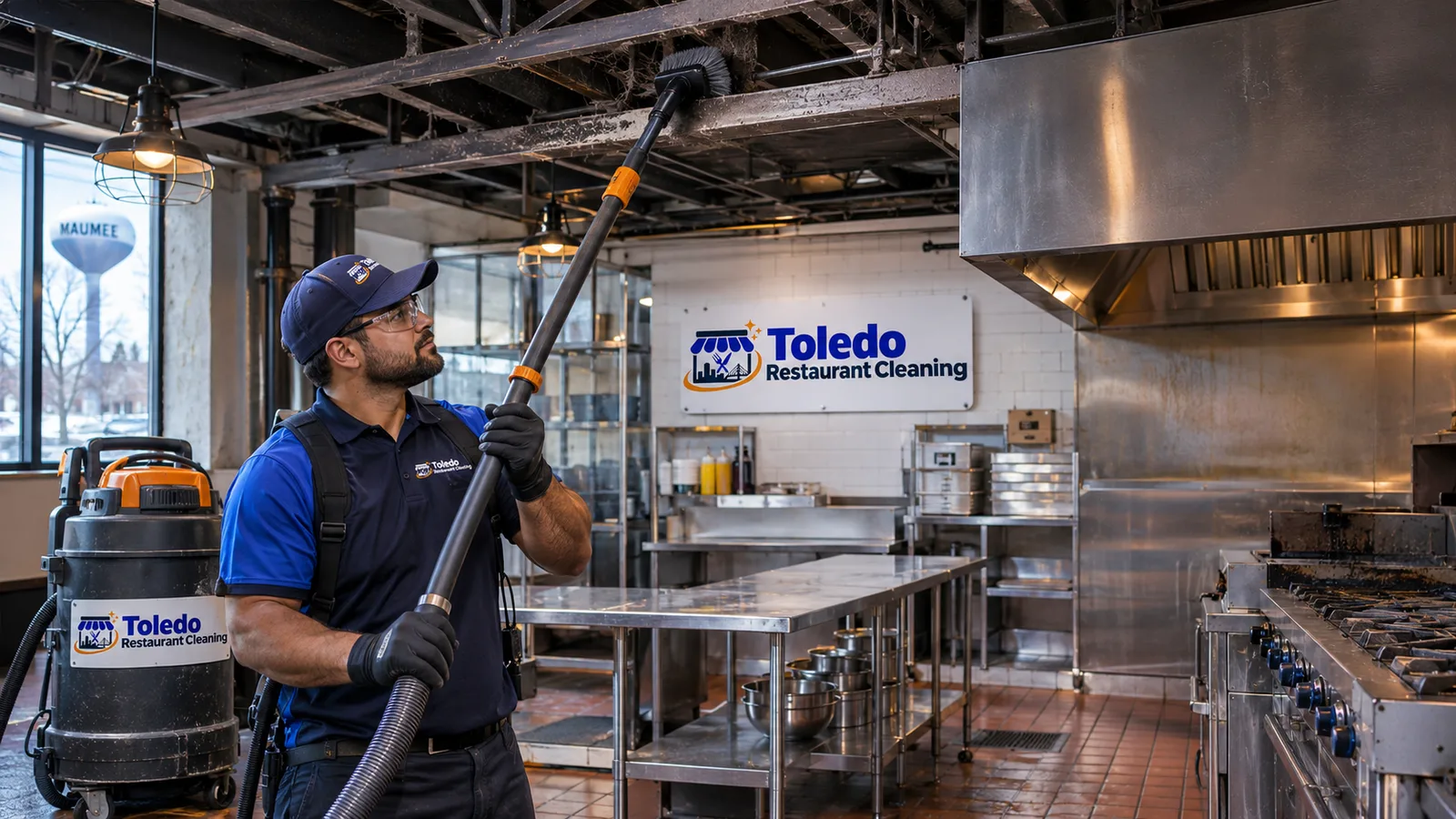
Restaurant High Dusting Maumee addresses buildup on surfaces that routine wiping and floor care cannot reach. Common targets include ceiling beams, exposed duct exteriors, conduit, pipes, vents, light housings, wall ledges, ceiling fans, and the tops of tall fixtures. In a commercial kitchen, airborne grease can make ordinary dust cling to these surfaces and form a heavier film.
A useful scope starts with the room, surface type, buildup, and access conditions. Dining rooms may require careful work around décor and seating, while production areas may need equipment covered or moved before overhead cleaning begins. Toledo's trusted restaurant team plans the work to limit disruption, protect food-contact areas, and leave accessible elevated surfaces visibly cleaner.
Toledo Restaurant Cleaning is based at 1502 Monroe St, Suite 5 in Toledo and provides high dusting for restaurants in Maumee. The goal is practical: define what can be reached safely, choose the right removal method, and coordinate the work with the restaurant's operating schedule.
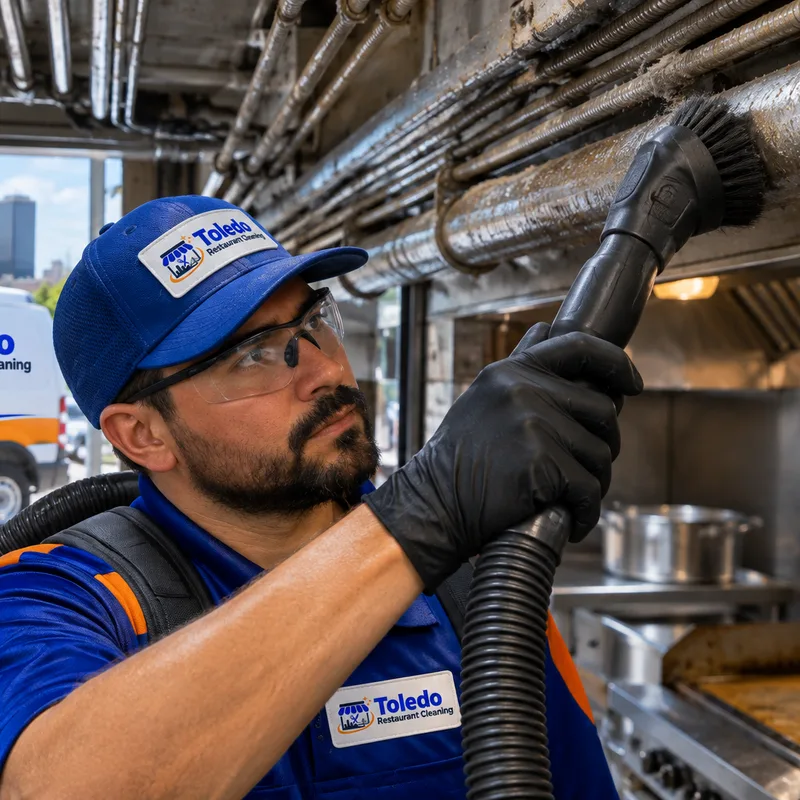
Every restaurant has a different overhead layout. Open-ceiling dining rooms collect visible dust on joists, pipes, cable trays, and suspended décor. Kitchens often have tighter access around equipment, utility lines, and washable wall surfaces. Storage rooms may have tall shelving, refrigeration tops, and ledges that are missed during daily cleaning.
The scope may include accessible rafters, beams, duct exteriors, pipes, conduit, sprinkler-pipe exteriors, diffusers, return grilles, light housings, fan guards, signs, soffits, wall tops, and the upper faces of fixed fixtures. Technicians select tools according to the surface and residue. HEPA-filtered vacuums and extension poles help capture loose material at the source. Damp wiping or controlled degreasing may be appropriate for washable surfaces with bonded residue.
High dusting is different from cleaning inside HVAC ducts, servicing electrical fixtures, or cleaning the interior of a commercial exhaust system. Those jobs require separate scopes and, in some cases, specialized contractors. An initial review identifies these boundaries before work starts.
Operational Details
Kitchen aerosols can bind dust to metal, painted surfaces, and ledges. Loose dust may vacuum away, while adhered film can require a compatible cleaning agent and controlled agitation.
Ceiling height, equipment placement, narrow aisles, and fragile fixtures determine whether extension tools, step equipment, or another access method is suitable.
Food, utensils, preparation surfaces, and sensitive equipment must be removed or protected before overhead soil is disturbed. The work plan should include cleanup at floor level.
High dusting is generally scheduled outside food preparation and guest service. That gives surfaces time to be exposed, cleaned, inspected, and reset before normal operations resume.
Service Workflow
We identify target areas, ceiling height, surface materials, residue type, access limits, fragile items, and equipment that needs protection. Any out-of-scope condition is documented before scheduling.
The plan sets out which areas must be cleared, what will be covered, and how technicians will reach the work. Restaurant staff can then prepare food, smallwares, and movable items before the appointment.
Where practical, technicians work from higher areas toward lower ones and use vacuum collection to control loose dust. This reduces the amount of material that settles onto protected surfaces and floors.
Washable surfaces with adhered film may receive controlled wiping or degreasing. Product choice and dwell time depend on the finish, location, and soil rather than a single chemical used throughout the facility.
Accessible target surfaces are checked, coverings are removed carefully, and fallen debris is collected. The restaurant receives notice of any inaccessible area or condition that may need separate attention.
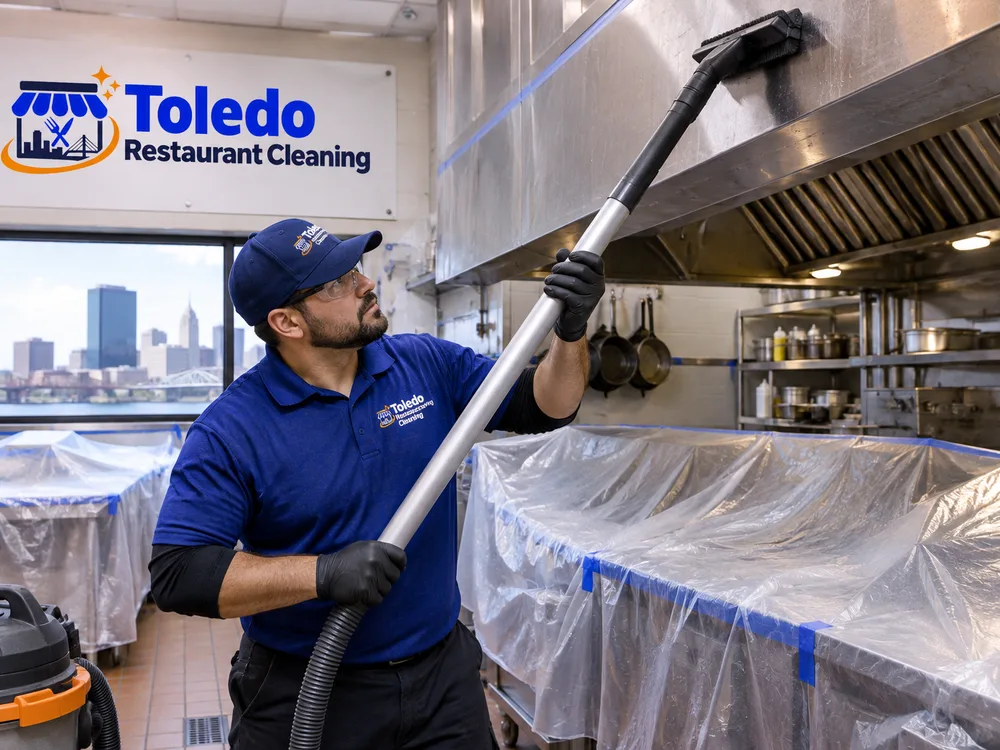
High dusting works best as one part of a coordinated Restaurant Kitchen Cleaning Maumee plan. Overhead work should normally happen before lower wall, equipment-exterior, and floor cleaning so loosened residue does not contaminate a finished surface. This top-down sequence also makes the final inspection easier.
A coordinated scope can address compatible non-food-contact surfaces around the kitchen while keeping the high-dusting work clearly defined. Food-contact surfaces need appropriate handling before the kitchen returns to use, and restaurant staff remain responsible for following their food-safety procedures. Cleaning does not replace equipment maintenance, pest control, HVAC service, or required exhaust-system work.
Maumee restaurants near the commercial corridors around Reynolds Road and Dussel Drive may have different schedules and layouts than smaller operations near Uptown Maumee. The cleaning plan should follow the actual kitchen, ceiling system, traffic pattern, and service hours rather than a generic checklist.
Service Area and Scheduling
Restaurants along busy routes such as Conant Street and the areas near the Ohio Turnpike and Interstate 475 can experience frequent deliveries, staff movement, and changing guest traffic. Access windows should account for opening preparation, vendor arrivals, and the time needed to reset the room. A written scope can divide a larger restaurant into work zones when cleaning the entire facility at once is impractical.
Northwest Ohio's heating and cooling seasons also keep overhead air systems active for long periods. Air movement can carry loose particles toward grilles, ledges, beams, and fixture tops. High dusting should therefore be considered at intervals based on visible accumulation, cooking volume, ceiling configuration, and prior cleaning history. A fixed schedule without inspecting the facility may be too frequent for one room and inadequate for another.
Before work, staff should remove exposed food, disposable packaging, utensils, and movable preparation items from the active zone. Cleaning chemicals should never be mixed, and product labels must control dilution, contact time, ventilation, and surface compatibility. These details matter more than speed when the work is performed around a functioning commercial kitchen.
Get a written high-dusting scope that identifies the target surfaces, access needs, preparation responsibilities, and scheduling plan before cleaning begins.
Call for a Free QuoteFAQs
Restaurant high dusting is priced after the ceiling layout, square footage, buildup, access method, and required preparation are reviewed. A small dining area with reachable ledges takes less labor than a full kitchen with tall ceilings, dense utility lines, and grease-bound residue. After-hours scheduling, extensive containment, and equipment that must be moved can also affect the quote. Toledo Restaurant Cleaning provides a scope based on the actual facility rather than a flat price that may omit necessary work.
High dusting should usually be performed outside active food preparation and guest service. Disturbing overhead residue can release particles, and technicians need controlled access around tables, equipment, and work aisles. Maumee restaurants with limited closure windows can discuss phased cleaning by room or work zone, provided each area can be cleared, protected, cleaned, and reset safely.
The time depends on the number of rooms, ceiling height, access, surface complexity, and whether residue is loose or grease-bound. A limited ledge-and-vent scope may fit within one off-hours work period, while a large kitchen and dining facility may need staged visits. An on-site review is the reliable way to establish timing for a specific Maumee restaurant.
The interval should be based on inspection rather than a universal calendar. Cooking volume, airborne grease, exposed ceilings, HVAC air movement, and the type of surface all affect accumulation. Visible buildup, residue near diffusers, or dust returning to lower fixtures are reasons to reassess the schedule. Documented periodic checks help managers adjust frequency by area.
High dusting does not automatically include cleaning inside exhaust hoods, ducts, or rooftop fans. It may cover accessible exteriors when they are listed in the scope and can be cleaned safely. Internal grease-exhaust systems are specialized equipment and should be handled under the appropriate separate service and inspection requirements.
Staff should remove exposed food, utensils, smallwares, paper goods, and movable preparation items from the scheduled work zone. The restaurant should also identify alarm components, fragile décor, restricted equipment, and surfaces that cannot get wet. Toledo Restaurant Cleaning will confirm preparation requirements for the Maumee facility when the work scope is set.
High areas over fixed equipment may be cleaned when technicians can establish safe access and protect the equipment and nearby surfaces. Ceiling height, heat sources, electrical components, and the position of utility lines can limit the method or make an area inaccessible. These conditions are reviewed before the work is approved.
Plan the Next Step
Describe the rooms, ceiling type, visible buildup, and preferred service window. We will help define a practical scope for elevated surfaces and any coordinated kitchen cleaning.