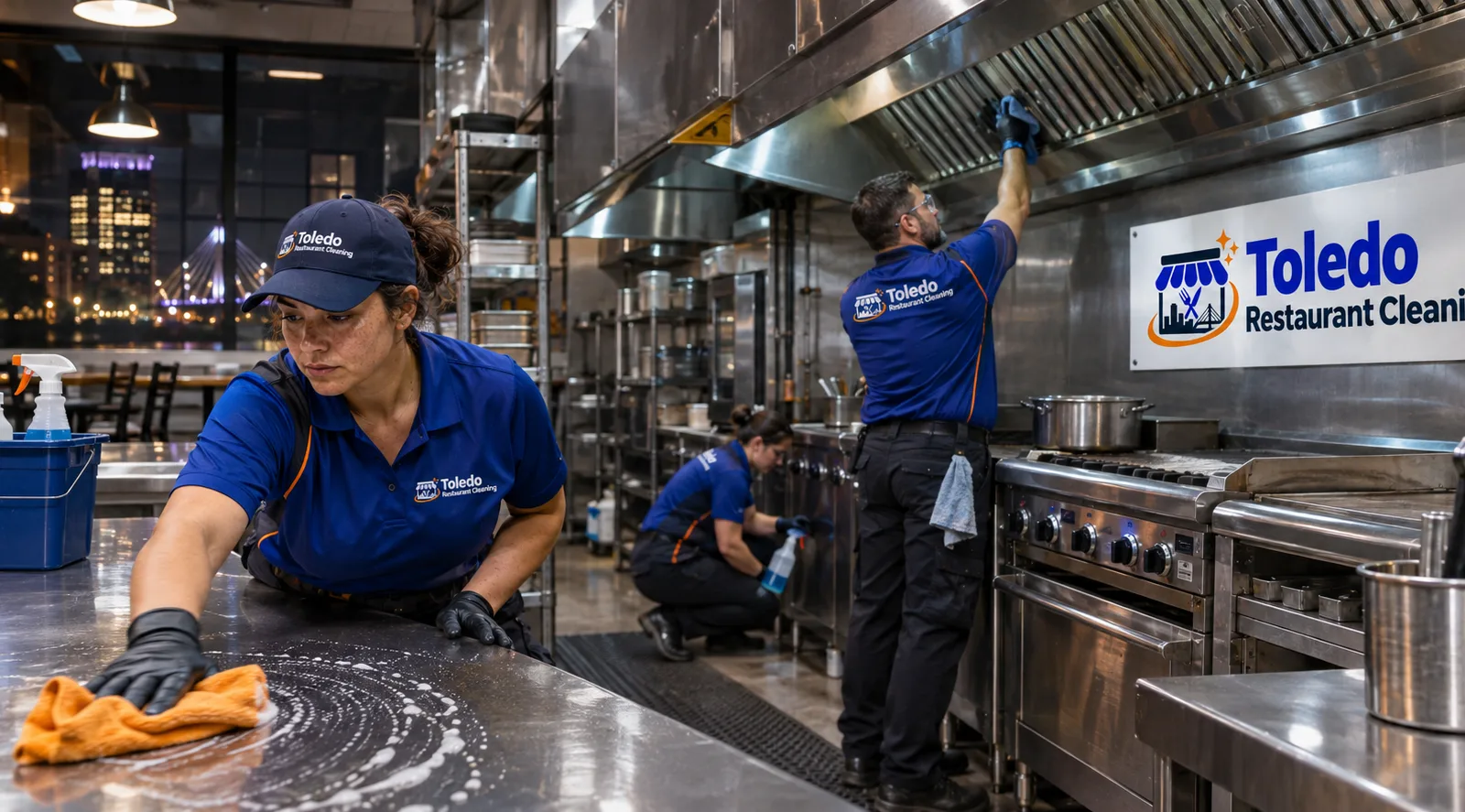
A trained cleaning crew performing detailed after-hours cleaning in a Toledo restaurant kitchen, with stainless-steel equipment and food-preparation surfaces visible.

Restaurant Deep Cleaning · Toledo, Ohio

Restaurant Cleaning Company in Toledo

Detailed cleaning for commercial kitchens, walk-in coolers, dining areas, and hard-to-reach surfaces, with a written scope built around your facility and operating schedule.

Commercial kitchen deep cleaning Walk-in cooler cleaning Dining areas and high dusting Written facility-specific scope

A Restaurant Cleaning Company Built Around Your Operation

A restaurant needs more than a quick wipe-down when grease, crumbs, dust, and residue have accumulated in difficult areas. Toledo Restaurant Cleaning provides restaurant deep cleaning services with attention to the equipment, surfaces, access limits, and scheduling demands found in food-service facilities. Our work can support an upcoming inspection, a seasonal reset, a change in management, or a recurring sanitation plan.

Before work begins, Toledo's local restaurant service learns how the kitchen and dining space are used, when crews can work, and which areas need the most attention. The resulting scope may cover cook lines, floors, wall surfaces, walk-in units, storage areas, dining rooms, restrooms, and overhead dust collection points. We distinguish between surfaces that need degreasing, areas that require food-safe cleaning methods, and equipment that must be handled according to manufacturer instructions.

Our address on Monroe Street places us near Downtown Toledo and the Warehouse District, where restaurants often work within older commercial buildings, compact kitchens, and limited loading access. In nearby entertainment areas, work may need to begin after late closing times. Restaurants in suburban locations may have larger production areas, multiple walk-in units, and more extensive back-of-house floors. Those differences affect staffing, equipment, sequencing, and the time required.
Request a Callback

Included Work

Restaurant Deep Cleaning Services

Kitchen Deep Cleaning

Detailed work can address cook-line exteriors, preparation tables, shelving, wall surfaces, splash areas, floor edges, drains, and accessible spaces around or beneath equipment. The agreed scope identifies what will be moved, what remains in place, and which components are excluded.

Walk-In Cooler Cleaning

Walk in cooler cleaning can include floors, walls, shelving, door surfaces, gaskets, and accessible fan-guard exteriors. Food inventory must be protected or relocated, and electrical or refrigeration components are not saturated.

Dining and Customer Areas

Restaurant detailed cleaning may cover booths, chair bases, table supports, ledges, partitions, baseboards, hard flooring, and other touchpoints that routine service can miss.

High Dusting

High dusting in Toledo restaurants targets accessible rafters, pipes, vents, light exteriors, ceiling fans, signs, and ledges. The method is selected to control falling debris and protect food-contact areas.

Storage and Utility Areas

Dry storage rooms, shelving, floor perimeters, service corridors, employee areas, and accessible utility-room surfaces can be included when they are identified during the walkthrough.

Opening or Turnover Cleaning

A deep clean can prepare a restaurant for reopening, new management, equipment changes, or the handoff of an existing food-service space. Scope and timing depend on site condition and contractor activity.

Commercial Kitchen Deep Cleaning in Toledo

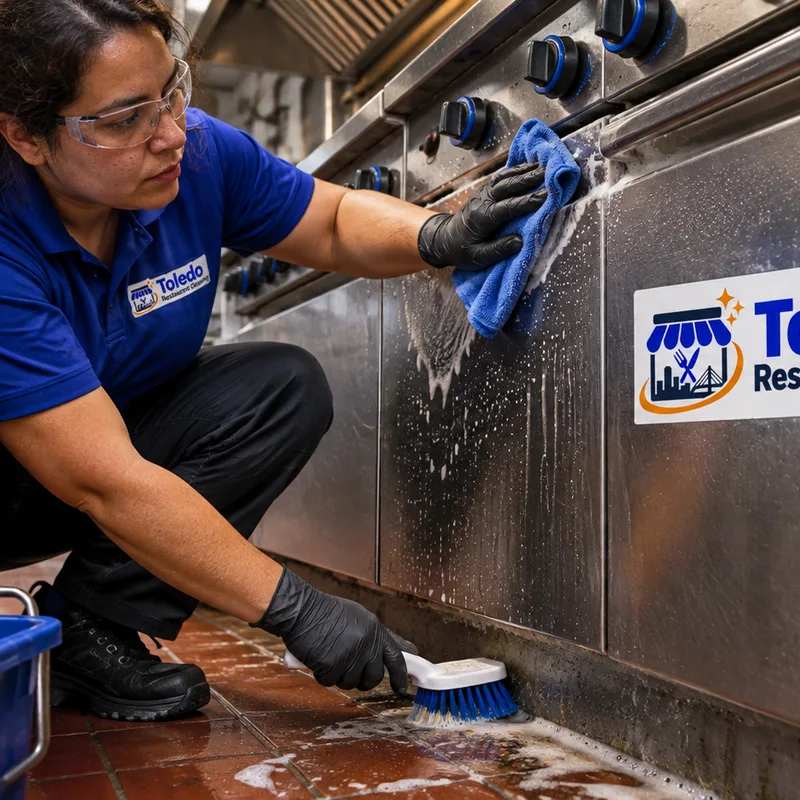
Close view of a restaurant cleaner degreasing accessible stainless-steel cook-line exteriors and cleaning floor edges with food items removed from the work area.
Compatible products and controlled dwell time help remove built-up kitchen soil without treating every surface the same.

Commercial kitchen deep cleaning starts with controlled preparation. Food, utensils, packaging, and small equipment may need to be removed or covered. Product selection then depends on the soil and surface. Grease calls for an appropriate degreaser and dwell time, while stainless steel, painted walls, quarry tile, resilient flooring, and rubber gaskets each require compatible methods.

Our restaurant deep cleaners work through the approved scope in a planned order. High surfaces are addressed before lower surfaces and floors so settled debris is captured near the end of the process. Cook-line exteriors, casters, equipment legs, wall junctions, and floor edges receive close attention because residue commonly builds up around transitions and restricted-access points. Cleaning chemicals are never mixed, labels and safety data instructions govern use, and food-contact surfaces receive the rinsing or follow-up treatment specified by the product manufacturer.

Deep cleaning does not replace required daily sanitation, pest-control work, hood-system service, fire-suppression maintenance, refrigeration repair, or hazardous-material remediation. If a task requires a different specialist, we identify the boundary before work begins rather than treating it as routine cleaning.

Request a Callback

Service Workflow

How Professional Restaurant Deep Cleaning Works

01

Walk Through the Facility

We review the kitchen, walk-ins, dining space, storage rooms, restrooms, access points, and overhead areas. The walkthrough also identifies fragile finishes, active leaks, loose components, heavy buildup, and equipment that cannot be moved.

02

Define the Written Scope

The proposal states which rooms, surfaces, and equipment exteriors are included. It also records access requirements, customer preparation, exclusions, work hours, and any areas that need special handling.

03

Plan Around Operations

Cleaning is scheduled around closing, opening, deliveries, food preparation, and other contractors. Downtown loading conditions, shared commercial entrances, and late operating hours can affect crew arrival and equipment staging.

04

Prepare and Clean

The crew protects adjacent areas, organizes tools and chemicals, and works through the facility in sequence. Methods may include dry soil removal, degreasing, agitation, detail wiping, controlled rinsing, wet pickup, and floor cleaning.

05

Review the Completed Scope

The final review checks the listed work areas and records any surface condition or inaccessible location that prevented completion. Recurring needs can then be placed on a practical schedule.

Walk-In Coolers and High Surfaces Need a Separate Plan

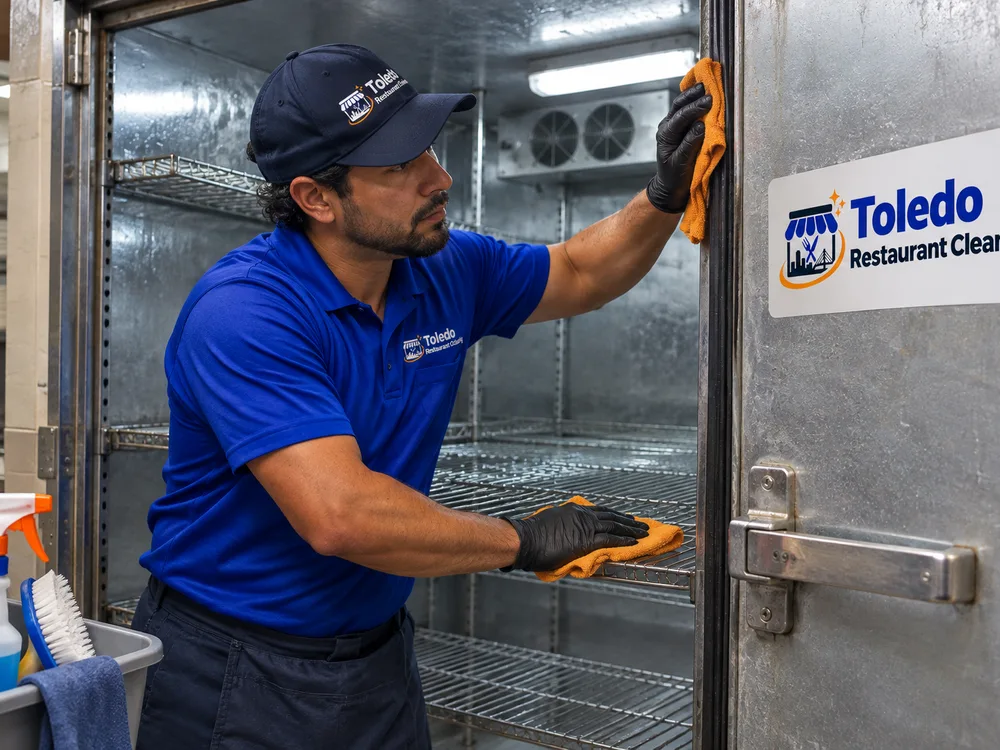
A restaurant cleaning professional wiping walk-in cooler shelving and door gaskets while packaged inventory is safely removed from the immediate work zone.
Walk-in work is planned around inventory protection, refrigeration components, and moisture control.

A walk-in cooler is a temperature-controlled work area, not an ordinary room. Inventory, condensate, moisture, shelving layout, electrical components, and refrigeration equipment all affect the cleaning method. Before service, the operator should decide where exposed food and movable inventory will be held. Cleaning may include accessible walls, floors, shelving, door interiors, handles, thresholds, and gaskets, but refrigeration coils, wiring, controls, and mechanical repairs require appropriate technical service.

Overhead cleaning presents a different risk. Dust on pipes, structural members, vent exteriors, light housings, and high ledges can fall onto equipment or preparation surfaces if the area is not isolated and cleaned in the right order. We assess safe reach, ladder placement, ceiling height, and obstructions before including high dusting. Work over active cook lines or exposed food is not performed without suitable shutdown and protection.

Toledo's winter weather can bring tracked-in salt, grit, and moisture through entrances and service doors. These soils spread into dining areas and back-of-house traffic lanes, so cold-season scopes may need extra attention at mats, thresholds, grout lines, and floor perimeters. The cleaning plan should respond to actual soil conditions rather than rely on the same checklist year-round.

Request a Callback

Clear Expectations

What to Ask Before Hiring Restaurant Deep Cleaners

A useful proposal is specific enough that both parties understand the result being purchased. Ask which equipment surfaces are included, whether appliances will be moved, who removes food and smallwares, what happens around electrical components, and how the crew handles restricted areas. Confirm whether the quoted work includes walls, floors, drains, overhead dust, walk-ins, dining areas, and restrooms. Similar terms can hide very different scopes.

Scheduling also deserves a direct conversation. A crew may need time after shutdown for hot equipment to cool and for employees to clear food and utensils. The restaurant then needs enough time before reopening to reset the space and complete its own food-safety procedures. If painters, repair technicians, pest-control providers, or hood specialists are working during the same closure, their tasks should be sequenced so one trade does not contaminate or damage another's finished work.

Finally, discuss frequency based on use rather than a generic calendar. Frying volume, menu type, operating hours, customer traffic, storage practices, floor material, and the limits of the in-house cleaning routine all affect how quickly residue returns. A professional restaurant deep cleaning plan should complement daily and weekly employee tasks, not blur responsibility for them.

Get a written cleaning scope built around your kitchen layout, operating hours, walk-in units, overhead areas, and current soil conditions.

Call for a Free Quote

FAQs

Restaurant Deep Cleaning Toledo FAQs

How much do restaurant deep cleaning services cost in Toledo?

Restaurant deep cleaning is usually priced after a walkthrough because facility size, buildup, equipment density, access, and the requested scope can change labor substantially. A compact dining room with light detail work is different from a full commercial kitchen, several walk-ins, and extensive high dusting. The written proposal should identify included surfaces, preparation duties, exclusions, and scheduling conditions before work starts.

How long does a restaurant deep clean take?

A focused cleaning may fit within one closed period, while a larger kitchen or whole-facility scope may require a longer shutdown or phased work. Heavy grease, tightly packed equipment, high ceilings, walk-in inventory, and limited Downtown Toledo loading access can add time. The schedule is established after the walkthrough and coordinated with closing, cooling, reopening, and food-preparation needs.

Do we need to remove food before kitchen deep cleaning?

Exposed food, utensils, packaging, and movable preparation items generally need to be removed or securely protected before deep cleaning begins. Walk-in cooler cleaning also requires an inventory plan so products remain at safe temperatures and do not obstruct shelves, walls, or floors included in the scope. Customer preparation requirements are documented before the service date.

Can commercial kitchen cleaning include equipment interiors?

Equipment interiors are included only when they are specifically listed and can be cleaned safely without technical disassembly. Routine restaurant cleaning is different from servicing ovens, refrigeration systems, hood ducts, grease interceptors, or fire-suppression equipment. Manufacturer restrictions, utility shutoffs, temperature, and accessibility determine what a cleaning crew can handle.

Can high dusting be completed while the restaurant is open?

High dusting is generally scheduled when food preparation and customer service have stopped. Dust and debris can fall from pipes, rafters, vent exteriors, lights, and ledges, so the work zone must be controlled and surfaces beneath it protected. Ceiling height, safe ladder placement, and overhead obstructions are assessed before the task is approved.

How often should a Toledo restaurant schedule detailed cleaning?

The right frequency depends on cooking volume, operating hours, menu, traffic, floor type, ventilation, and the effectiveness of daily cleaning. Winter salt and moisture can increase floor-detail needs near Toledo entrances, while high-volume frying may require more attention around cook-line exteriors and nearby surfaces. A walkthrough can separate recurring priorities from occasional projects.

Will restaurant deep cleaning prepare us for a health inspection?

Deep cleaning can address visible soil and sanitation-related cleaning needs, but it cannot guarantee an inspection result. Compliance also depends on food handling, temperatures, storage, employee practices, equipment condition, pest control, and other operating requirements. The restaurant operator remains responsible for meeting applicable rules and correcting repair or process issues.

Plan the Next Step

Plan Your Restaurant Deep Cleaning

Tell Toledo Restaurant Cleaning about the facility, problem areas, preferred work window, and upcoming deadlines. We will define the scope, preparation requirements, and practical next steps before cleaning begins.