Commercial Kitchens
Scheduled work can address preparation areas, sinks, washable wall surfaces, accessible equipment exteriors, floor edges, and hard-to-reach spots included in the agreed scope.
Serving Toledo, Ohio & surrounding areas
Restaurant Cleaning · Perrysburg, Ohio
Dependable cleaning for commercial kitchens, dining rooms, restrooms, and high-traffic floors, scheduled around your operating hours.
Restaurant Cleaning Services Perrysburg businesses rely on should account for food residue, grease migration, heavy foot traffic, and the narrow window between closing and the next shift. Toledo Restaurant Cleaning develops recurring or one-time scopes around the way each restaurant operates. Work can cover back-of-house and front-of-house areas without treating every surface the same.
Our process starts with a walkthrough. We identify the rooms and surfaces to be cleaned, discuss access and scheduling, and note equipment or stored items that require special care. The resulting scope can define tasks, frequency, and priorities so managers know what is included. From our Toledo base, Toledo's restaurant specialists coordinate restaurant cleaning for Perrysburg businesses and keep communication practical when operating needs change.
A written plan is especially useful for restaurants near Levis Commons, where evening and weekend traffic can shape service timing. Downtown Perrysburg establishments may have compact work areas or limited loading access, while businesses near the I-475 and US 20 commercial corridors may need cleaning coordinated around longer operating hours. These details affect crew access and sequencing, so they belong in the plan before service begins.
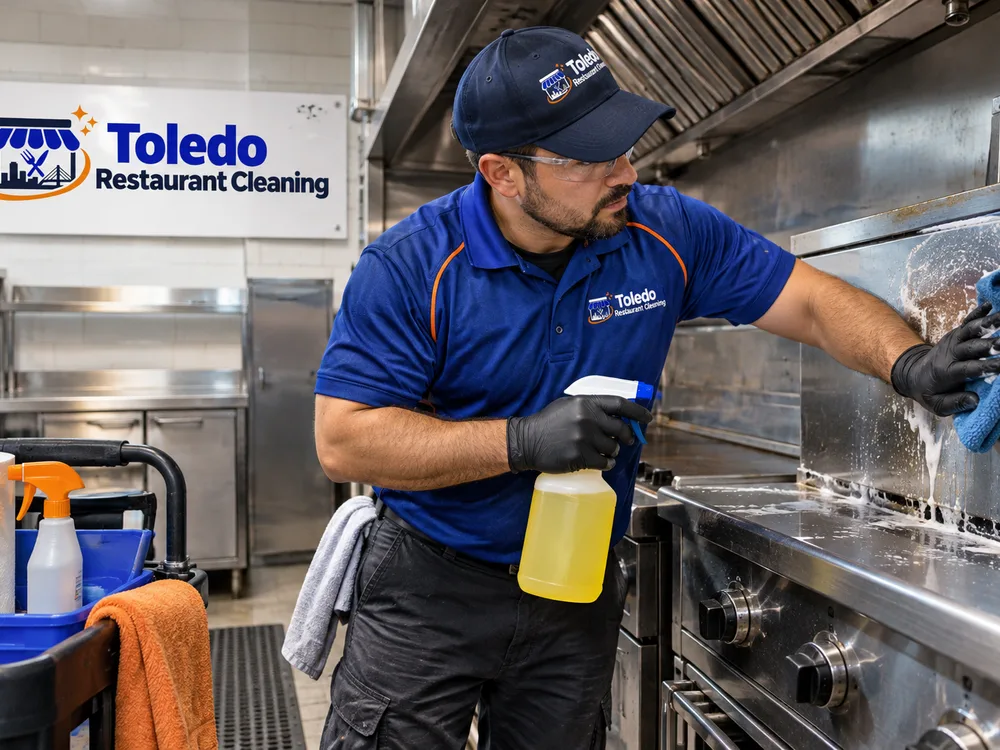
A restaurant kitchen produces soils that ordinary office cleaning is not designed to handle. Cooking oil can settle on nearby walls, equipment exteriors, and floors. Food particles collect along edges and beneath movable items. Cleaning methods must match the soil and the surface rather than relying on one product for the entire room.
Back-of-house service may include degreasing accessible equipment exteriors, wiping preparation surfaces, cleaning sinks, scrubbing floors, and detailing baseboards or floor-wall junctions. High-touch points such as handles, switches, and push plates can be added to the scope. The plan should also distinguish cleaning from sanitizing: cleaning removes soil, while sanitizing is a separate step performed with a suitable product, at the label dilution, and for the stated contact time.
Exhaust hoods, ducts, and fans require specialized inspection and service beyond routine surface cleaning. A walkthrough establishes whether accessible hood exteriors are included and identifies work that should be assigned to a qualified exhaust-system provider. Restaurant cleaning should also avoid disrupting pest-control devices, chemical dispensers, and food storage arrangements.
Included Work
Scheduled work can address preparation areas, sinks, washable wall surfaces, accessible equipment exteriors, floor edges, and hard-to-reach spots included in the agreed scope.
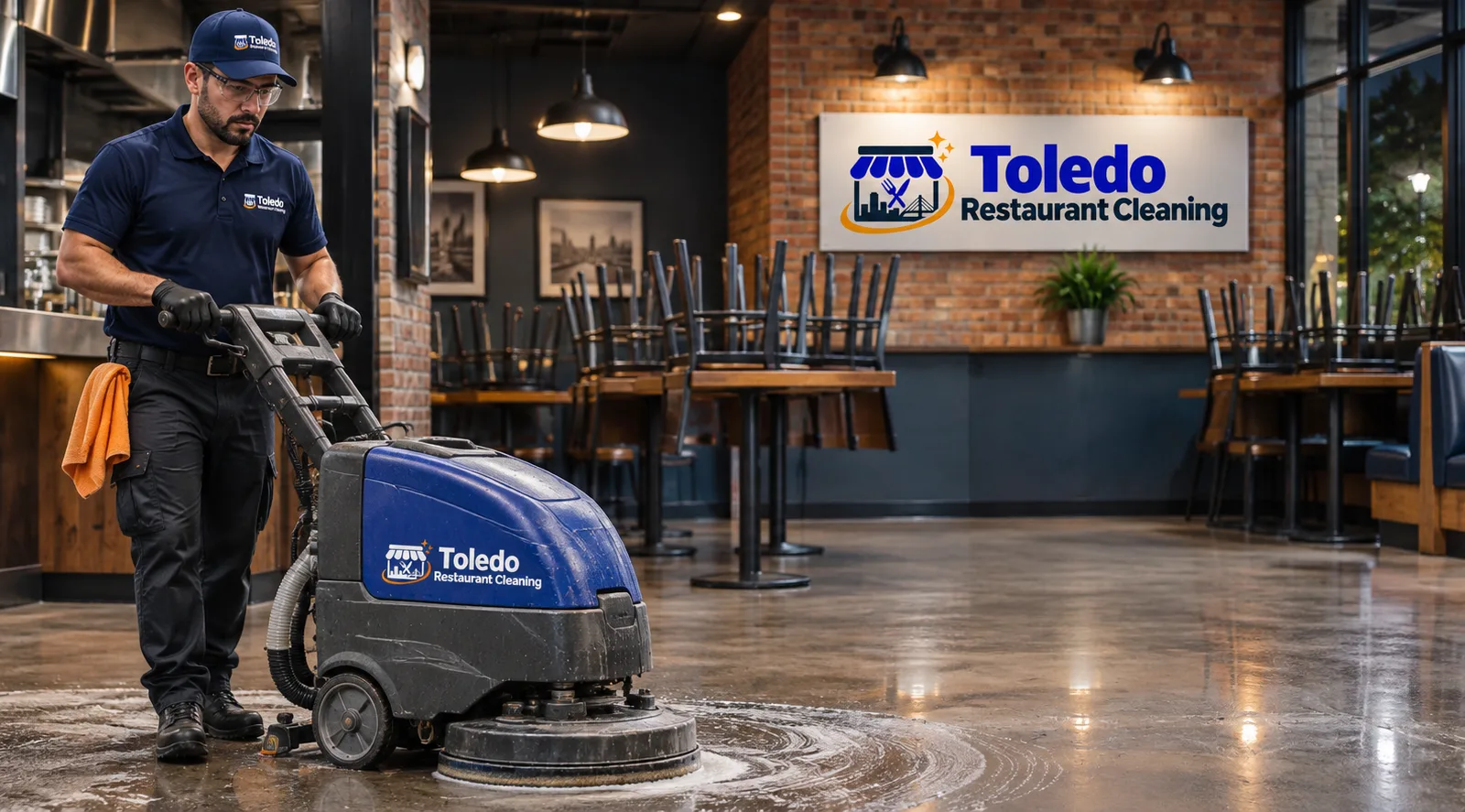
Table bases, seating, ledges, partitions, high-touch points, and floors receive attention after guests leave and movable items are cleared.
Fixtures, partitions, mirrors, dispensers, touchpoints, and floors can be cleaned and disinfected with products suited to the surface and task.
Tile, resilient flooring, grout lines, entry areas, and other hard floors may require vacuuming, mopping, machine scrubbing, or periodic detail work.
Interior waste stations and designated collection areas can be cleaned according to the agreed scope, access rules, and disposal procedures.
One-time cleaning can support a new opening, management change, seasonal reset, or recovery after especially demanding operating periods.
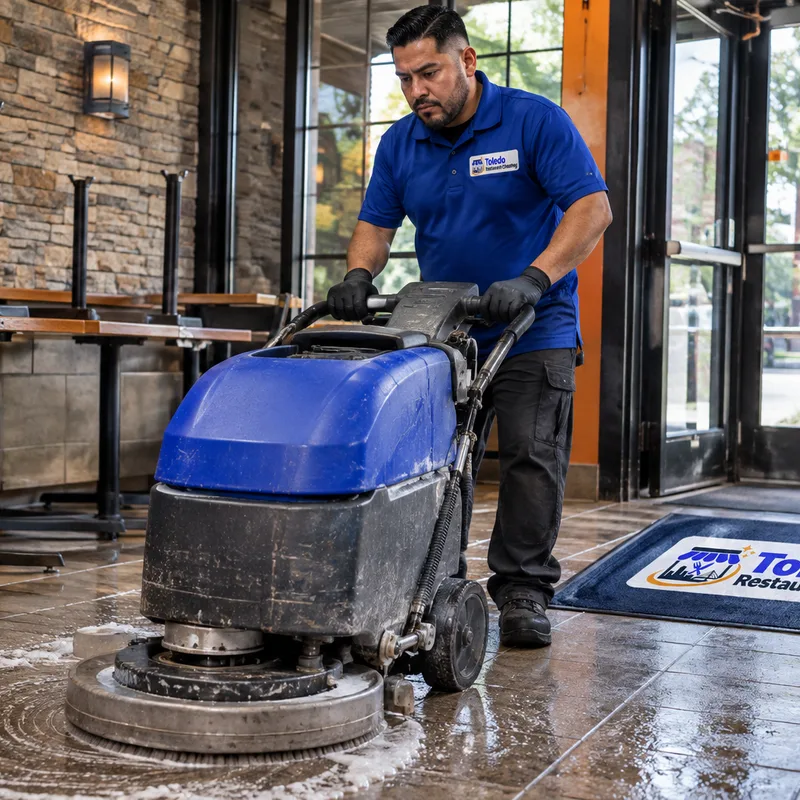
Guests notice sticky floors, dusty ledges, marked entry glass, and restroom condition quickly. A front-of-house plan focuses on those visible details while accounting for the materials used throughout the restaurant. Wood, stainless steel, glass, upholstery, tile, and luxury vinyl each need an appropriate method.
Perrysburg weather also affects floor care. Winter moisture and deicing residue can enter on footwear, while rainy periods increase tracked-in soil. Entry mats help capture debris, but they do not replace regular attention to vestibules, transition points, and nearby flooring. Cleaning frequency may need adjustment during periods of heavier soil rather than remaining fixed throughout the year.
The goal is a dining room that is ready for staff setup. That requires clear responsibility for moving chairs, clearing tabletops, securing valuables, and reporting damage or maintenance concerns. These practical handoff details reduce delays and help the cleaning crew concentrate on the approved work.
Service Workflow
We review the kitchen, dining areas, restrooms, entrances, floors, and other requested spaces. Access limits, surface conditions, service windows, and operational priorities are documented.
The plan identifies included tasks and how often they occur. Daily or recurring work can be separated from periodic deep cleaning so expectations remain clear.
Managers and the cleaning team confirm entry procedures, alarm instructions, chemical storage, restricted areas, and any equipment that must remain untouched.
The crew follows the approved sequence, and concerns can be reported for follow-up. The scope can be revised when hours, menus, traffic, or facility needs change.
Ask prospective cleaners to explain exactly what their recurring work includes. A useful proposal identifies surfaces, rooms, frequencies, exclusions, access assumptions, and responsibility for supplies. Broad terms such as “deep clean” can mean very different things unless the underlying tasks are listed.
Product use matters too. Safety Data Sheets should be available for workplace chemicals, and product labels govern dilution, application, dwell or contact time, and surface compatibility. Chemicals should never be mixed unless the manufacturer specifically allows it. Clean tools should also be assigned thoughtfully so restroom equipment is not carried into food-preparation spaces.
Restaurant Cleaning Perrysburg managers arrange should fit actual operating conditions. Ask how schedule changes are handled, who receives quality concerns, whether periodic floor work is separate, and how crews document areas they could not access. A dependable provider will discuss limitations directly rather than promising that every stain or worn surface can be corrected through cleaning.
Planning Your Scope
Recurring restaurant cleaning in Perrysburg typically ranges from about $250 to $1,000 or more per visit. A small dining room with limited back-of-house work may fall near the lower end, while a large kitchen, multiple restrooms, heavy grease, or periodic machine floor care raises the price. Final cost depends on square footage, cleaning frequency, soil level, service timing, access, surface types, and the exact tasks requested. Your price is confirmed after a walkthrough and review of the proposed cleaning scope.
Request a CallbackA walkthrough turns a general cleaning request into a practical scope based on your kitchen, guest areas, operating hours, and floor-care needs.
Call for a Free QuoteFAQs
Yes, service can often be planned outside guest hours when access and staffing allow. The walkthrough should establish closing duties, entry instructions, alarm procedures, the expected completion window, and which manager receives updates. Restaurants near Levis Commons or along busy commercial corridors may need different schedules on high-traffic nights.
The right frequency depends on operating hours, cooking volume, flooring, guest traffic, and what employees already clean during each shift. High-use kitchens and restrooms may need frequent attention, while detailing, grout cleaning, and machine floor care can follow a periodic schedule. A task-based plan is more useful than assigning one frequency to the entire restaurant.
Yes, a restaurant cleaning scope can include both back-of-house and front-of-house areas. Each area receives methods suited to its surfaces and soils. The written scope should state whether work includes accessible equipment exteriors, preparation surfaces, dining furniture, entry glass, restrooms, and floors.
Sanitizing can be included when it is identified in the approved scope and an appropriate product is used according to its label. Surfaces generally must be cleaned before a sanitizer can work as intended. Food-contact surfaces also require careful product selection and any rinsing or air-drying steps stated by the manufacturer.
Many grease deposits and surface soils can be reduced or removed, but permanent discoloration, damaged grout, worn finishes, and etched surfaces may remain. A test area can help determine what cleaning is likely to accomplish. Heavy buildup may also require a separate initial clean before recurring maintenance begins.
Food, utensils, cash, and sensitive records should be secured, and staff should complete the closing tasks assigned to them. Managers should provide clear access instructions and identify hot equipment, restricted spaces, damaged surfaces, or chemicals already in use. Movable items should be handled according to the agreed plan.
Yes, the scope or frequency can be reviewed when operating hours, guest volume, menu production, or weather-related floor soil changes. Perrysburg winters can bring moisture and deicing residue into entrances, so vestibules and nearby floors may need added attention during those periods.
Plan the Next Step
Tell Toledo Restaurant Cleaning about your operating hours, problem areas, and current routine. We will help define a practical scope for your Perrysburg kitchen, dining room, restrooms, and floors.