Fixtures and Partitions
Cleaning can include toilets, urinals, seats, flush controls, partition doors, latches, grab bars, and fixture bases. The exact checklist reflects the restroom's installed fixtures.
Serving Toledo, Ohio & surrounding areas
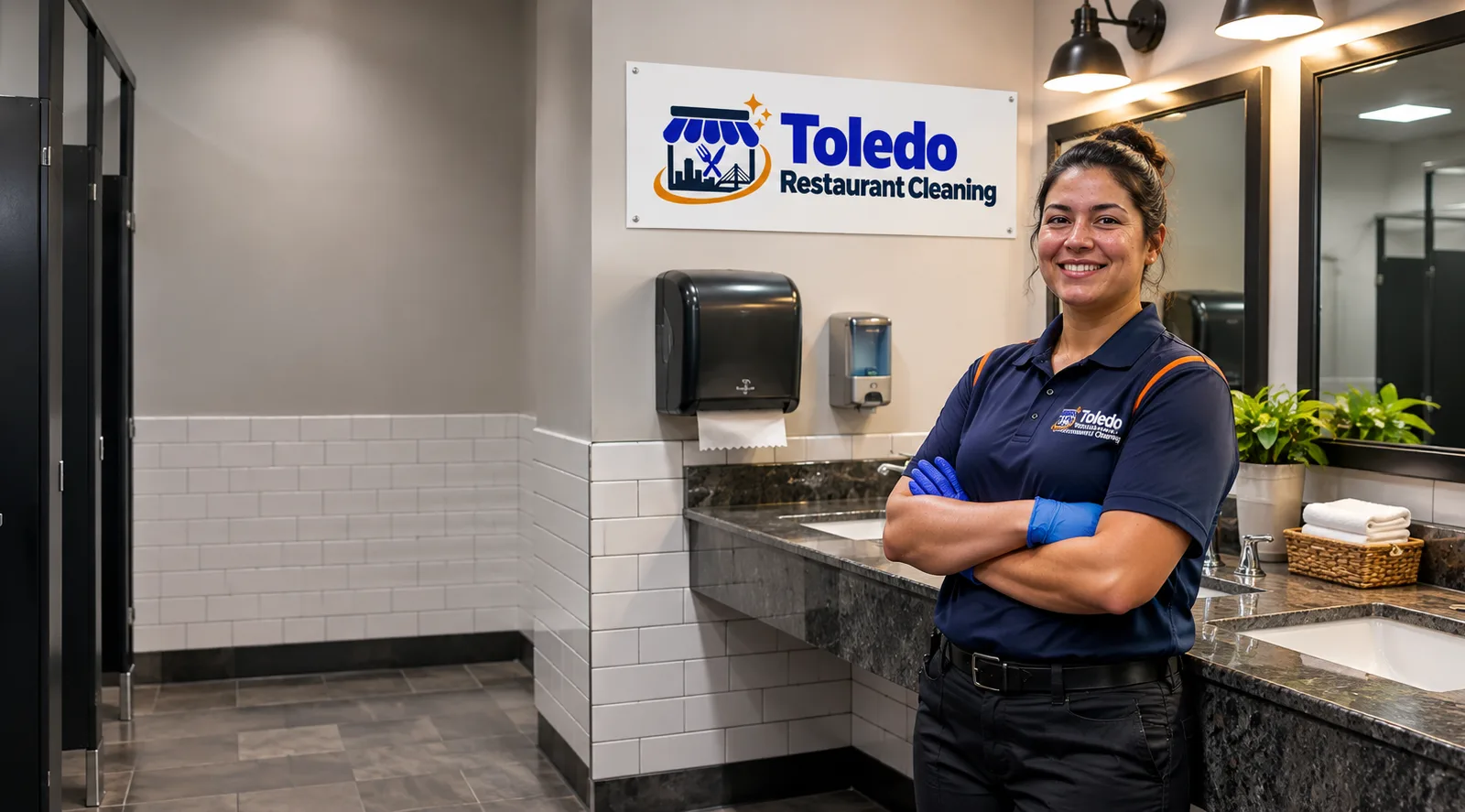
Restaurant Restroom Service · Oregon, Ohio
Keep guest restrooms clean, stocked, and ready for service with a cleaning plan built around your hours, traffic, fixtures, and facility needs.
Restaurant Bathroom Cleaning Oregon requires more than a quick wipe of the sink and a pass with a mop. Restrooms collect fingerprints, tracked-in soil, paper debris, soap residue, water spots, odors, and contamination on frequently touched surfaces. Toledo Restaurant Cleaning uses a defined scope for toilets, urinals, partitions, sinks, mirrors, dispensers, floors, doors, and other agreed surfaces so staff know what is covered.
We schedule restroom work around opening times, closing routines, deliveries, and other activity that affects access. Our office on Monroe Street keeps a professional restaurant company in Toledo close to Oregon and the surrounding Toledo area. That proximity matters when a restaurant needs a dependable recurring schedule rather than an occasional cosmetic cleanup.
The goal is a restroom that looks cared for when guests enter and that receives appropriate cleaning attention behind the scenes. We can discuss visit frequency, restroom layout, fixture count, floor type, busy periods, supply responsibilities, and any recurring trouble spots before defining the work.
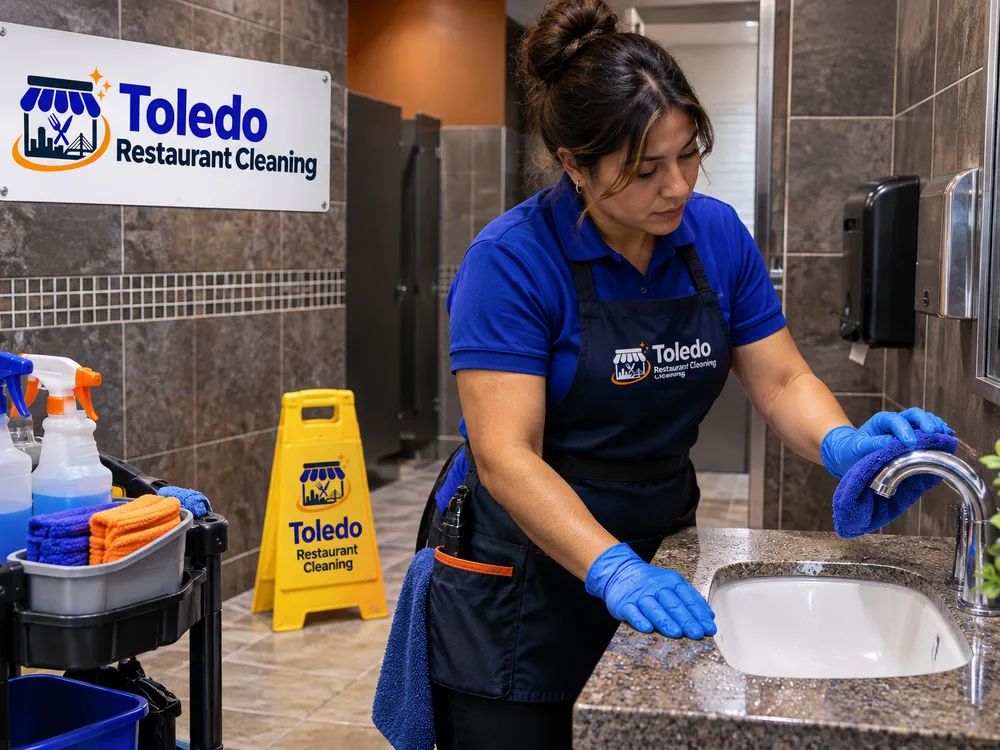
A practical restroom scope starts with soil removal. Loose debris is collected before wet cleaning, and visible buildup is addressed with products and tools suited to the surface. Toilets and urinals receive focused cleaning inside and out, including seats, flush controls, exterior bowls, bases, and nearby floor edges. Sinks, faucets, counters, mirrors, partitions, handles, dispensers, and door contact points are cleaned according to the agreed routine.
Floor care depends on the material and condition. Tile and grout may need attention along edges, around fixtures, and in corners where a broad mop cannot reach. Resilient flooring requires controlled product use so residue does not create a dull or tacky finish. Wet-floor signs and controlled access help protect guests and staff while floors are being cleaned.
Cleaning removes soil, while sanitizing and disinfecting are distinct processes. A disinfectant must remain visibly wet for the contact time stated on its label to work as directed. Products also need surface compatibility and proper dilution. Applying more chemical than directed can leave residue or damage finishes; mixing cleaning chemicals can create a serious hazard.
Included Work
Cleaning can include toilets, urinals, seats, flush controls, partition doors, latches, grab bars, and fixture bases. The exact checklist reflects the restroom's installed fixtures.
Faucets, counters, mirrors, soap dispensers, paper dispensers, door handles, push plates, and other frequent-contact areas receive scheduled attention.
Debris removal comes before damp mopping. Edges around partitions, walls, drains, and fixture bases are included when specified, rather than relying on open-floor passes alone.
Fragrance cannot correct residue around fixture bases, grout, waste receptacles, or drains. Cleaning the source is the practical first step when restroom odors recur.
Waste removal, liner replacement, and checks of soap, tissue, and paper towels can be assigned clearly. The restaurant and cleaning team should agree on who supplies consumables.
Recurring concerns such as splash zones, mineral deposits, damaged dispensers, or persistent grout discoloration can be noted so cleaning needs and maintenance issues are not confused.
Service Workflow
We discuss the number and type of fixtures, floor surfaces, guest traffic, service hours, access procedures, storage limits, and existing problem areas. A walkthrough can also identify surfaces that require special product care.
The written scope identifies tasks, frequency, supply responsibilities, and any exclusions. This prevents uncertainty about consumable restocking, interior glass, drains, wall washing, or periodic detail work.
Service is arranged to reduce conflict with guests and employees. When cleaning occurs during operating hours, signs, temporary closure procedures, and communication with restaurant staff help control access.
Crews remove debris, address higher surfaces and fixtures, clean toilets and urinals, manage waste, and finish with the floor. Tools used around toilet areas should remain separated from sink and counter tools.
Seasonal traffic, events, expanded hours, and staffing changes can affect restroom demand. The scope or visit frequency can be reviewed when the existing routine no longer matches actual use.
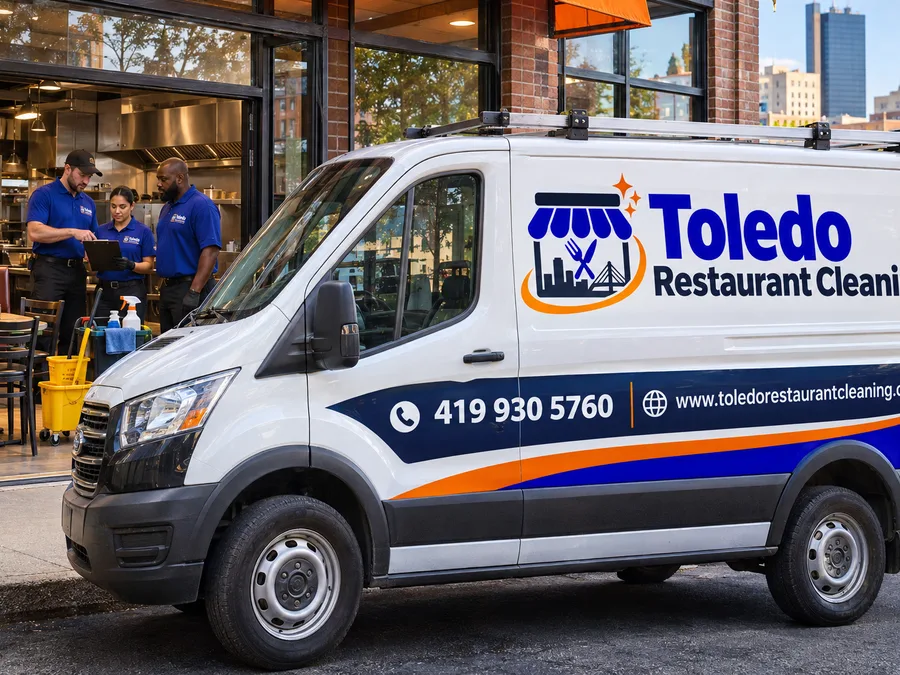
Restaurants near Navarre Avenue may experience concentrated traffic around meal periods, while businesses near the State Route 2 corridor may need schedules that account for commuters, travelers, and changing daily demand. In Downtown Oregon, closing routines and building access can shape when restroom work is practical. These conditions do not call for the same schedule at every property. They call for a plan based on the restaurant's real operating pattern.
Northwest Ohio weather also reaches restroom floors. Rain, winter slush, and deicing residue can be tracked through entrances and carried into guest areas. That can increase floor soil and moisture, especially during busy periods. Restroom cleaning should account for changing floor conditions rather than assuming one fixed level of work throughout the year.
Bathroom service can stand alone or be coordinated with broader Restaurant Cleaning Oregon work, but the restroom scope should remain explicit. A clear checklist helps management verify that fixtures, touchpoints, waste, floors, and supplies receive the agreed attention without relying on vague expectations.
Safe Procedures
Good restroom work depends on procedure as much as effort. A cleaner should first remove visible soil because dirt and organic material can interfere with a disinfectant. The product must then be applied according to its label, including dilution, ventilation, personal protective equipment, and contact time. Staff should never mix chlorine bleach with ammonia or acidic cleaners because dangerous gases can form.
Color-coded cloths, dedicated toilet tools, and a clean-to-dirty work order help limit cross-contamination. Gloves should be changed when moving between incompatible tasks, and reusable tools need proper cleaning and drying. Safety Data Sheets should be accessible for workplace chemicals, while containers should remain labeled rather than being transferred into unidentified bottles.
Surface condition matters too. Acidic products can harm some stone and metal finishes. Abrasive pads may scratch mirrors, polished fixtures, or partition surfaces. Persistent staining, loose toilets, failed caulk, leaking faucets, damaged grout, and broken dispensers may require maintenance rather than stronger cleaning. We point out observable concerns so restaurant management can decide on the appropriate repair.
A restroom walkthrough can turn general expectations into a written checklist, practical schedule, and clear division of supply responsibilities.
Call for a Free QuoteFAQs
Pricing is based on the scope and service frequency rather than a single flat rate for every restaurant. The number of restrooms, toilets and urinals, floor area, current buildup, operating hours, access requirements, supply responsibilities, and requested detail work all affect the quote. A walkthrough of the Oregon facility is the soundest way to confirm a written price.
The right frequency depends on guest volume, operating hours, restroom size, and how much monitoring restaurant staff perform between professional visits. A low-volume dining room may need a different plan than a restaurant near Navarre Avenue with sharp lunch or dinner peaks. Restrooms should also be checked during service so spills, empty dispensers, or urgent sanitation concerns are addressed promptly.
Yes, restroom cleaning can occur during operating hours when access is controlled and the work is coordinated with restaurant staff. Wet-floor signs, temporary closures, product ventilation needs, and guest flow must be considered. Some detailed tasks are better scheduled before opening or after closing because they require longer dwell time or unobstructed access.
Consumable supplies are included only when the service agreement assigns that responsibility. The checklist should state who purchases and stores soap, toilet tissue, paper towels, waste liners, and related products. This is especially important when storage space is limited or dispensers accept proprietary refills.
Disinfection should focus on compatible surfaces and be performed according to the product label, rather than treating every material the same way. Toilets, flush controls, handles, latches, faucets, and other frequent-contact points are common priorities. Mirrors, some metals, and finished surfaces may require different products to avoid haze, corrosion, or damage.
Cleaning can address many odors caused by residue, waste, splash around fixtures, and soil in grout or floor edges. Odors linked to dry traps, plumbing leaks, damaged seals, ventilation problems, or hidden moisture may require building maintenance or a licensed trade. We can document visible conditions that appear to fall outside routine cleaning.
The start date depends on walkthrough availability, requested frequency, access arrangements, and the condition of the restrooms. After the Oregon property is reviewed, the scope and schedule can be confirmed. Restrooms with substantial buildup may need an initial detailed cleaning before a recurring maintenance routine begins.
Plan the Next Step
Tell Toledo Restaurant Cleaning about your operating hours, restroom layout, traffic patterns, and current concerns. We will help define a practical scope that keeps guest bathrooms ready for daily use.