A professional cleaner preparing a polished restaurant dining room after service, with clean tables, chairs, and floors visible.

Restaurant Cleaning · Toledo, Ohio

Restaurant Cleaning Services in Toledo

Keep dining rooms, bars, restrooms, floors, and back work areas ready for guests and staff with a cleaning plan built around your hours.

Dining rooms and bars Restrooms and touchpoints Surface-specific floor care Scheduling around operating hours

Restaurant Cleaning Services Built Around Your Operation

Restaurant Cleaning Services should support the way your business actually runs. Toledo Restaurant Cleaning develops written scopes around your layout, operating hours, traffic, surfaces, and trouble spots. Daily or recurring work can cover the front of house, dining room, bar, guest restrooms, floors, staff areas, and appropriate back-of-house spaces.

Our restaurant specialists serving Toledo work around opening, closing, and delivery schedules so cleaning does not interfere with guests or food preparation. Before recurring service starts, we identify what gets cleaned, how often it is addressed, and which tasks require periodic attention. That gives managers a practical standard for routine checks.

A Monroe Street dining room has different demands than a neighborhood restaurant in Old West End or a high-traffic operation near the Franklin Park retail area. Downtown venues may contend with event-driven traffic, while restaurants near the University of Toledo can experience changing traffic around academic schedules. Winter salt and wet grit also enter on shoes, so entrances and hard floors may need more frequent attention during cold weather.
Request a Callback

Included Work

A Complete Restaurant Cleaning Scope

Front Of House Cleaning

Entry glass, host stands, ledges, seating, partitions, door touchpoints, and accessible fixtures receive attention based on the agreed scope. Restaurant Front Of House Cleaning in Toledo can be scheduled after closing or before staff arrive.

Restaurant Dining Room Cleaning

Tables, chair backs, booth surfaces, baseboards, windowsills, and accessible décor collect crumbs, fingerprints, and dust. Dining Area Cleaning addresses the surfaces guests notice while keeping service pathways orderly.

Restaurant Bar Cleaning

Bar fronts, stools, foot rails, accessible shelving, glass partitions, and surrounding floors require detail work. Cleaning assignments should be clearly separated from food-contact and beverage equipment duties handled by restaurant staff.

Restaurant Restroom Cleaning

Restaurant Restroom Cleaning in Toledo can include toilets, urinals, sinks, mirrors, partitions, dispensers, touchpoints, floors, and waste removal. Consumable restocking can be included when supplies and responsibilities are agreed upon.

Restaurant Floor Cleaning

Vacuuming, mopping, machine scrubbing, edge work, and periodic floor care are matched to tile, sealed concrete, resilient flooring, or carpet. Entry soil and grease tracked from work areas require different chemistry and methods.

High Dusting

Vents, pipes, ledges, beams, light housings, and other reachable overhead surfaces can hold dust beyond normal nightly cleaning. High Dusting is commonly placed on a periodic rotation based on access and buildup.

Front and Back Areas Need Different Methods

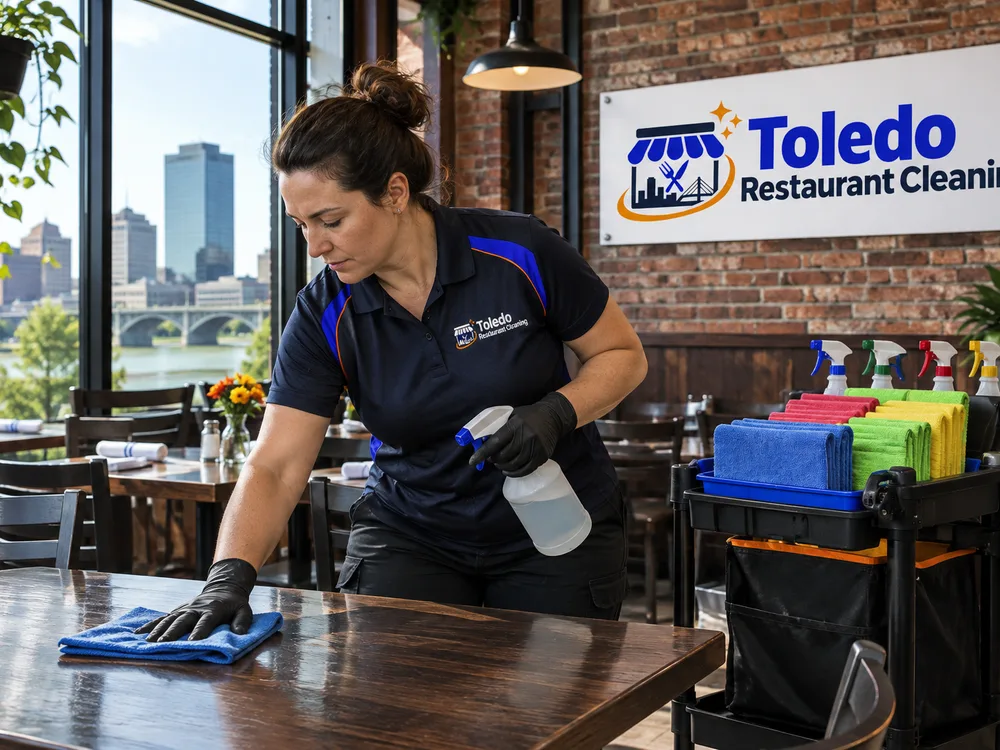
A restaurant cleaner using a color-coded microfiber system in a dining area, with cleaning tools organized away from tables and food-contact items.

Guest spaces call for quiet, detailed work with close attention to presentation. Cleaners address smudged glass, crumbs along booth edges, dusty ledges, restroom fixtures, and soil around entrances. Products and tools should suit each surface, and dwell time matters when a disinfectant is used. A surface must remain wet for the contact time stated on the product label.

Restaurant Back Of House Cleaning in Toledo requires a clearly defined boundary. Routine janitorial work may cover staff restrooms, break areas, corridors, waste staging points, washable walls, and non-production floors. Cleaning active cooking equipment, exhaust systems, grease traps, or food-contact surfaces is specialized work and should not be assumed unless it appears in the written scope.

Color-coded microfiber cloths and mop systems help separate restroom work from dining and general areas. Crews should also follow the restaurant's rules for restricted areas, chemical storage, wet-floor controls, and access around food or clean utensils. These details reduce cross-use of tools and make the nightly routine easier to verify.

Request a Callback

Service Workflow

How We Set Up Recurring Restaurant Cleaning

01

Walk Through the Restaurant

We review the dining room, bar, restrooms, entrances, floor types, staff areas, access points, and any appropriate back areas. We also discuss operating hours and the condition expected before opening.

02

Build a Written Scope

Tasks are assigned by area and frequency. Nightly priorities are separated from weekly detail work and periodic services such as high dusting or machine floor cleaning.

03

Plan Access and Safety

The plan records entry procedures, alarms, key handling, restricted spaces, chemical requirements, waste locations, and where tools may be stored. Scheduling is set around closing, opening, and deliveries.

04

Clean and Check the Work

The crew follows the approved task list and checks priority areas before leaving. Managers have a defined process for reporting a missed item, changed condition, or new request.

05

Adjust for Traffic and Seasons

The scope can change when patio use, events, winter entry soil, or operating hours affect cleaning demand. Periodic tasks are reviewed before buildup becomes a larger problem.

Restaurant Floor Cleaning That Matches the Surface

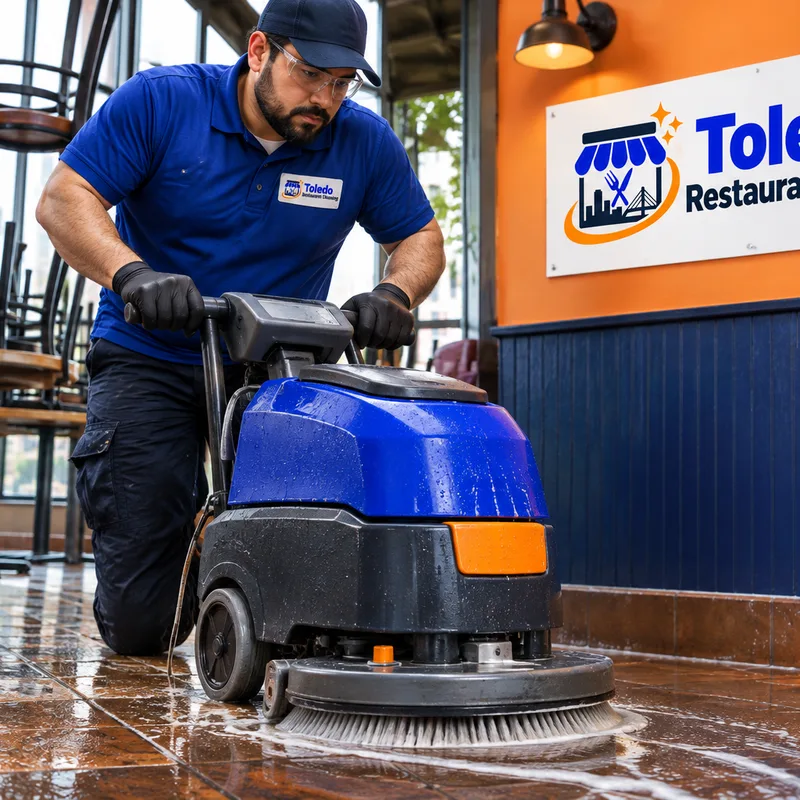
A cleaner operating a compact floor scrubber on a restaurant tile floor after chairs have been moved for edge-to-edge access.

Floors often reveal whether a cleaning plan fits the restaurant. Grit accumulates near entrances, crumbs settle under seating, and tracked residue can leave a film in service paths. Effective Restaurant Floor Cleaning begins with dry soil removal. Mopping dirty grit into the floor rarely produces a clean result.

Ceramic and quarry tile may require attention to grout lines and edges. Sealed concrete needs compatible chemistry that will not damage the finish. Resilient flooring may need neutral cleaning for routine care, while carpeted dining areas benefit from thorough vacuuming and planned extraction when conditions warrant it. Greasy soil requires a suitable degreaser, controlled dilution, and complete rinsing when the label calls for it.

Toledo winters bring snow moisture and deicing residue into vestibules and dining rooms. Entrance matting, more frequent dry pickup, and prompt removal of wet soil can help limit haze and grit damage. Wet-floor signs and controlled work zones are used until cleaned surfaces are safe for normal traffic.

Request a Callback

Clear Expectations

What a Reliable Cleaning Plan Should Define

A useful proposal identifies more than a list of rooms. It states the frequency of each task, areas excluded from service, products or equipment needed, access arrangements, consumable responsibilities, and how concerns are reported. It should also distinguish routine cleaning from disinfecting. Cleaning removes soil; disinfecting uses a labeled product on an appropriate pre-cleaned surface for the specified contact time.

Ask how tools are separated between restrooms and dining areas, who performs quality checks, and how substitutions are handled if a product is incompatible with a finish. If overhead work is included, the plan should identify safe access and protect furniture, tableware, and food-related items before High Dusting begins.

Toledo Restaurant Cleaning is based at 1502 Monroe St, Suite 5, Toledo, OH 43604. That local base supports practical walkthroughs for restaurants in central Toledo and surrounding commercial areas. Each operation still receives its own scope because floor area, seating density, hours, and required detail work determine the labor involved.

A walkthrough can turn general cleaning concerns into a written plan with clear areas, frequencies, responsibilities, and scheduling.

Call for a Free Quote

FAQs

Questions Toledo Restaurant Managers Ask

How much do Restaurant Cleaning Services cost in Toledo?

Restaurant cleaning is usually quoted after a walkthrough rather than at a flat citywide rate. Price depends on cleanable square footage, service frequency, seating density, restroom count, floor types, soil level, access hours, and whether periodic work such as machine scrubbing or high dusting is included. The exact price is confirmed after the restaurant and requested scope have been reviewed.

Can cleaning be scheduled after the restaurant closes?

Yes, recurring cleaning can often be arranged after closing or before the opening crew arrives. The schedule must account for staff departure, alarms, locked areas, deliveries, and the time floors need to dry. Downtown event traffic and late bar hours can also affect the practical start time.

What is included in Restaurant Front Of House Cleaning in Toledo?

Front Of House Cleaning can include entrances, host stations, dining furniture, booths, ledges, glass, touchpoints, waste removal, and floors. The final list is written around the restaurant's layout. Food-contact surfaces and active service equipment should have clearly assigned cleaning responsibilities.

Does Restaurant Restroom Cleaning in Toledo include restocking?

Restocking can be included when the restaurant supplies the consumables and the task appears in the service scope. Cleaners can check designated soap, paper towel, tissue, and liner supplies while cleaning fixtures, partitions, mirrors, touchpoints, and floors.

Can you clean the back of house and kitchen?

Routine Restaurant Back Of House Cleaning can cover agreed staff areas, corridors, washable surfaces, and non-production floors. Cooking equipment, exhaust hoods, ductwork, grease traps, and certain food-contact surfaces require separate methods or specialist service. A walkthrough defines those boundaries before work starts.

How often should high dusting be scheduled?

High Dusting is usually scheduled periodically, with frequency based on ceiling height, air movement, exposed structures, and the rate of visible buildup. Restaurants with open ceilings, suspended décor, or exposed ductwork may need closer monitoring. Safe access and protection of dining furniture and food-related items must be planned first.

How quickly can recurring cleaning begin?

The start date depends on walkthrough availability, scope approval, access arrangements, and crew scheduling. A straightforward dining room and restroom plan can be prepared faster than a multi-area operation requiring specialty floor work or restricted back-of-house access.

Plan the Next Step

Put a Clear Restaurant Cleaning Plan in Place

Tell us about your hours, layout, floor types, and problem areas. We will discuss the right cleaning frequency and prepare a practical scope for your operation.