Cook Lines
Degreasing focuses on buildup around fryers, ranges, grills and equipment edges, with attention to splash zones and floor areas normally covered by mats.
Serving Toledo, Ohio & surrounding areas
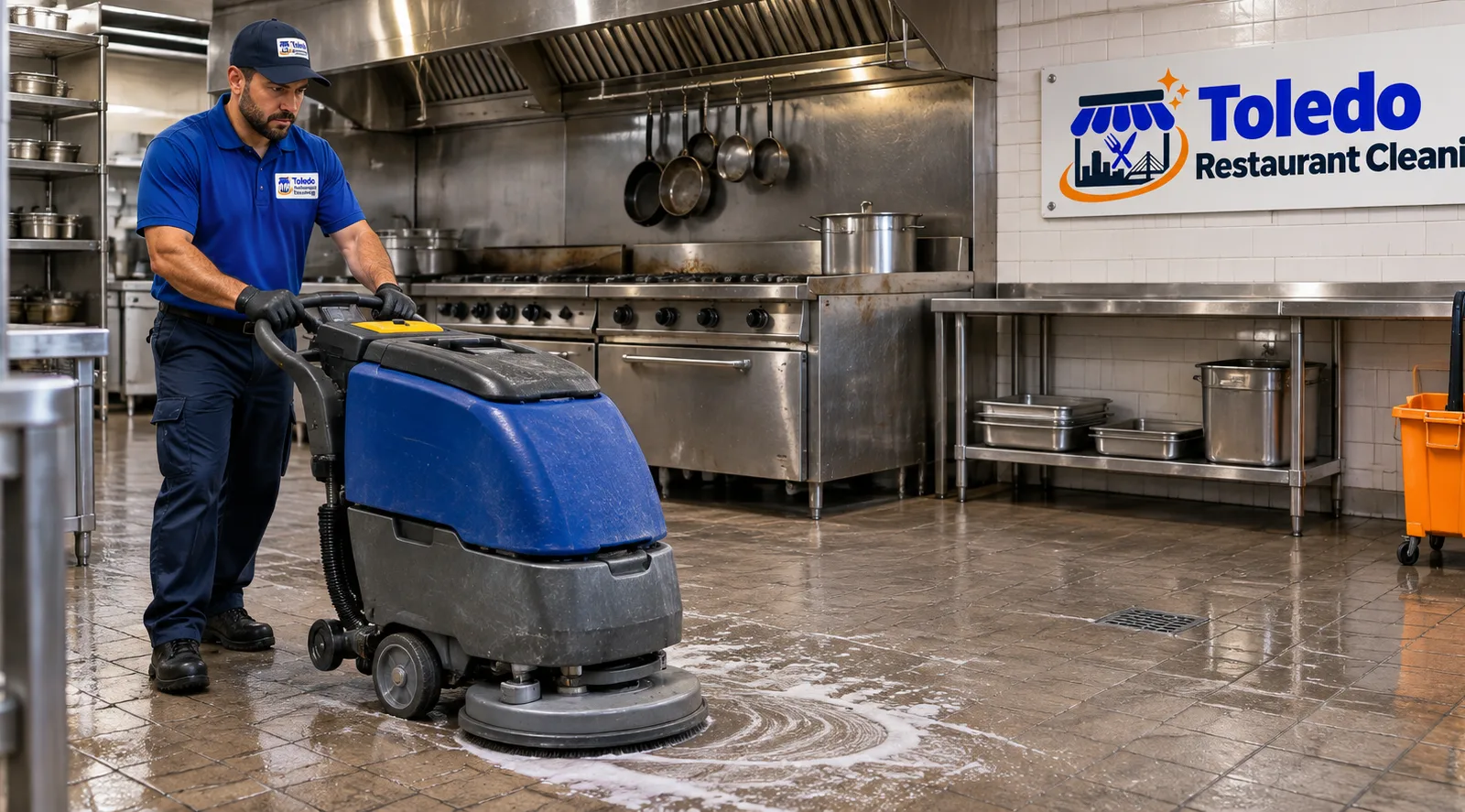
Restaurant Floor Cleaning · Toledo, Ohio
Professional degreasing for tile, grout and high-traffic kitchen areas, scheduled around your restaurant's operating hours.
Commercial Kitchen Floor Cleaning addresses the grease film, tracked-in soil and food residue that routine mopping can leave behind. Toledo Restaurant Cleaning uses commercial degreasers, agitation and controlled rinsing to clean restaurant tile, grout lines, edges and high-traffic work zones. The scope can include cook lines, prep areas, dishwashing stations, walk-in approaches, storage areas and service corridors.
A dirty mop solution often redistributes grease instead of removing it. Residue then collects in textured tile, low spots and porous grout, leaving the floor dull or tacky. A deeper cleaning process breaks up that buildup and extracts the contaminated solution rather than allowing it to dry back onto the surface.
Our team works as a professional restaurant company in Toledo, OH, planning each job around the floor material, kitchen layout and hours of operation. Restaurants near the downtown entertainment district may need service after late closing times, while businesses around the University of Toledo may need cleaning planned around changing academic and event traffic. In either setting, the work area and reopening time should be agreed upon before cleaning begins.
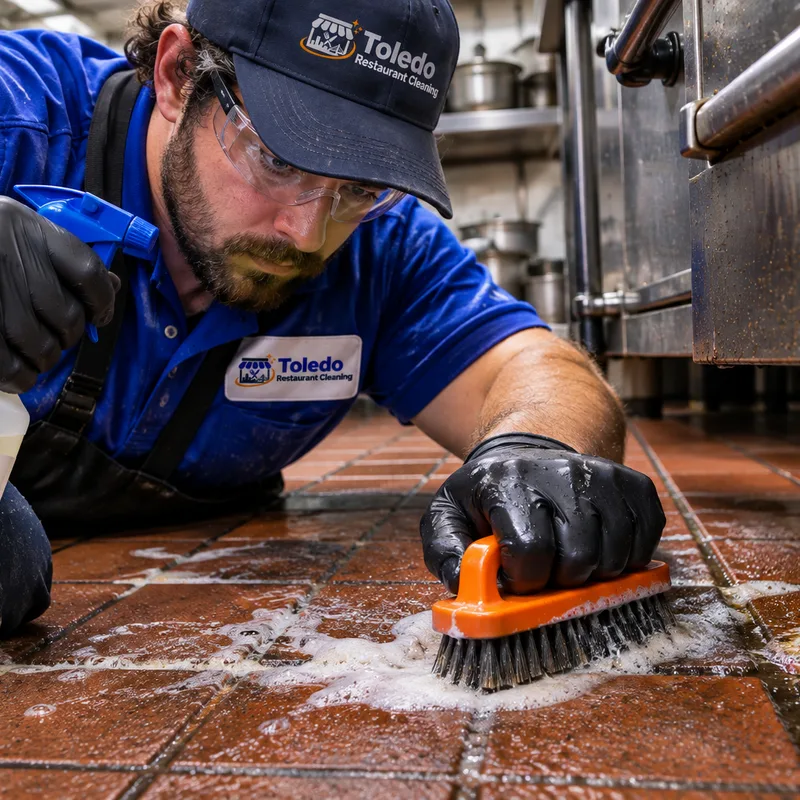
Effective kitchen floor degreasing starts with identifying where grease accumulates. Heavy deposits often appear around fryers, ranges, floor mats and equipment legs. Soil also gathers along wall edges, under movable equipment and near transitions between cooking, prep and dishwashing zones.
The cleaning method depends on the floor. Quarry tile is common in commercial kitchens because its textured surface provides traction, but that texture also holds grease and soil. Ceramic tile, porcelain tile, sealed concrete and resinous flooring may require different chemistry, dwell time and agitation. Before broad application, the cleaner should be checked for compatibility with the floor, grout, coatings and nearby metal surfaces.
Dwell time gives a degreaser time to loosen oily residue. Mechanical scrubbing then works the solution into textured surfaces and grout lines. Edges and tight spaces may require hand agitation. The loosened soil is recovered with wet extraction or controlled pickup, followed by rinsing as needed. The floor must be left free of standing solution and allowed to dry before staff resume normal traffic.
Included Work
Degreasing focuses on buildup around fryers, ranges, grills and equipment edges, with attention to splash zones and floor areas normally covered by mats.
Cleaning removes tracked soil, food residue and oily film while accounting for tables, shelving, carts and other movable fixtures.
These areas often combine grease, detergent residue and frequent water exposure. Controlled solution pickup reduces the material left on the floor.
Door thresholds and nearby traffic lanes collect debris from repeated cart and employee movement. Detail work addresses edges and transitions.
High-use routes between the kitchen, dining room, storage and waste areas receive focused scrubbing based on their soil load.
Restaurant grout cleaning targets recessed joints, corners and wall lines that broad-area equipment may not reach.
Service Workflow
We identify the flooring material, heavy grease zones, damaged grout, floor drains, transitions, access limits and equipment that can be moved safely. The agreed scope also sets expectations for timing and drying.
Loose debris and removable floor mats are cleared. Food, utensils and exposed preparation surfaces should be protected or removed before cleaning begins. Work zones are arranged to limit unnecessary traffic.
A commercial cleaning solution suited to the floor and soil is applied at the proper dilution. It is given enough dwell time to loosen grease without being allowed to dry on the surface.
Floor equipment cleans open areas while detail tools work along equipment bases, corners, wall lines and grout. Heavier deposits may require repeated treatment rather than excessive chemical strength.
The suspended grease and dirty solution are collected using suitable wet-recovery equipment. Rinsing is performed when the product and floor condition call for it, with attention to residue control.
We check the cleaned zones, remove remaining standing moisture and discuss any permanent staining, failed grout or damaged flooring found during the work. Staff should return only after the surface is adequately dry.
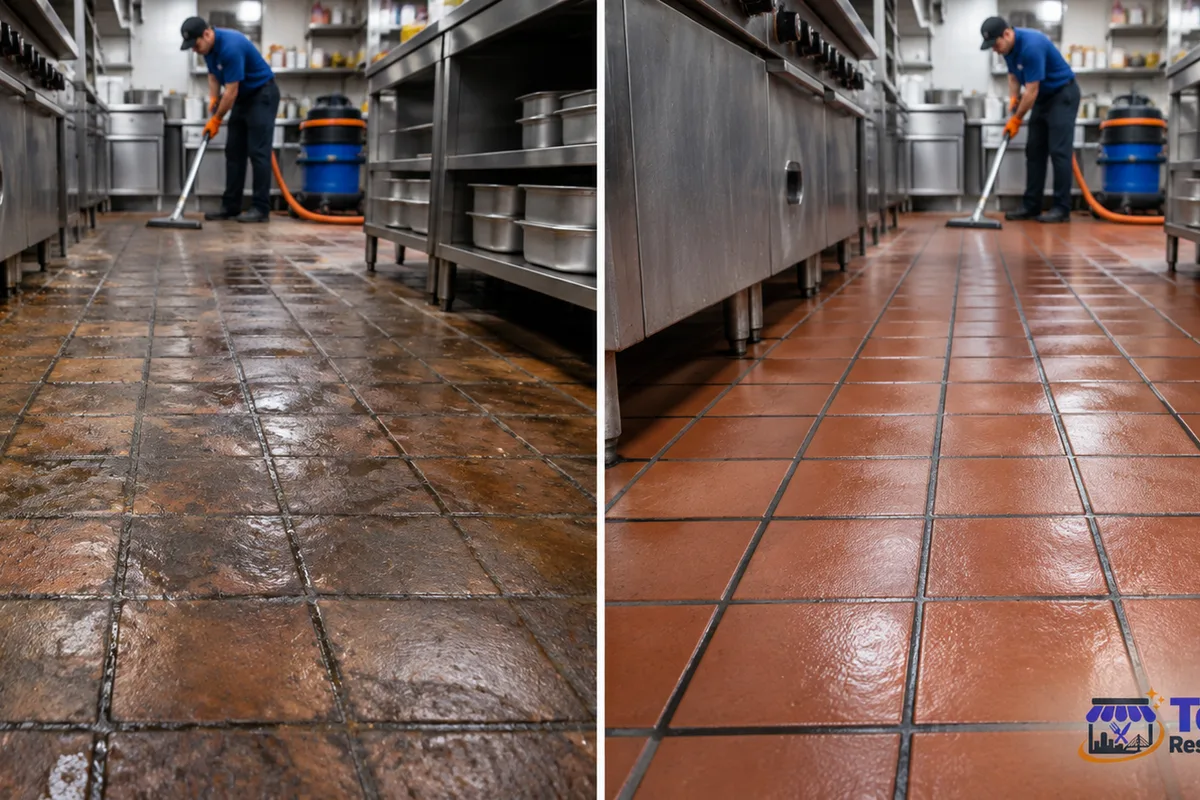
Tile and grout do not soil in the same way. A tile face may release grease under agitation while recessed grout remains dark because it holds compacted residue. Grout can also have permanent discoloration, erosion or missing material that cleaning will not repair. An inspection helps separate removable buildup from wear or damage.
Our restaurant tile cleaning process treats grout as a detail task rather than assuming a floor machine will reach every joint. Brush selection matters because agitation must be strong enough to remove soil without damaging deteriorated grout. Cleaning also needs to account for floor drains and transitions so loosened debris is recovered instead of pushed into inaccessible areas.
Toledo winters bring road salt, slush and gritty moisture into restaurants on footwear and delivery traffic. That material can combine with kitchen grease in service corridors and back-of-house entrances. Seasonal soil may require dry debris removal before degreasing so grit does not interfere with agitation or remain in grout lines. Entry control and regular mat maintenance help reduce what reaches the kitchen, but they do not replace periodic deep cleaning.
Service Area and Scheduling
Restaurant Floor Cleaning in Toledo should fit the operating schedule rather than disrupt food preparation or service. Many kitchens are best cleaned after closing, during a planned shutdown or before a day when the floor has enough time to dry. The cleaning window must include preparation, chemical dwell time, agitation, recovery and final inspection. A rushed window can leave inaccessible areas untreated or put staff back on a damp floor.
Downtown restaurants near Fifth Third Field and the Huntington Center may have closing times and service volume shaped by games or events. Cleaning should be planned for a quieter night rather than placed immediately after a heavy service when staff still need the kitchen. Businesses in West Toledo and along Central Avenue often have steady delivery and employee traffic, making back-door access and vehicle placement practical scheduling concerns. Restaurants in Maumee or Perrysburg may have different operating patterns, but they still need a confirmed access plan and a clear reopening time.
Before service, identify alarm procedures, loading access, equipment that may be moved and areas that must remain available. The restaurant should also disclose loose tile, failed grout, unstable mats or known drainage problems. Toledo Restaurant Cleaning can then build a written scope around the actual floor rather than offering a one-method treatment for every kitchen.
Clear Expectations
Professional Commercial Floor Cleaning in Toledo can remove accumulated grease, loose soil and many food-related residues when the floor material is sound and the buildup is accessible. It can improve the appearance of tile and grout and reduce slick residue, but cleaning cannot guarantee that a floor will be slip-proof. Slip resistance also depends on the flooring texture, footwear, spills, maintenance practices and whether the surface is wet.
Cleaning does not repair cracked tile, missing grout, failed coatings, poor drainage or an uneven substrate. Those conditions should be documented and directed to the appropriate repair contractor. Permanent staining may also remain after the removable soil has been lifted. A reputable assessment distinguishes cleaning needs from physical defects before work starts.
Daily maintenance still matters after deep cleaning. Use the chemical dilution specified by the product manufacturer, replace dirty mop solution instead of spreading it, clean spills promptly and wash floor mats on an appropriate schedule. Avoid mixing cleaning chemicals. Restaurant staff should follow product labels and the establishment's safety procedures.
Describe your kitchen layout, flooring material and preferred cleaning window so we can prepare a practical scope for the areas that need attention.
Call for a Free QuoteFAQs
The right interval depends on cooking volume, grease exposure, floor texture and the quality of daily maintenance. A high-output fryer line may need professional restaurant floor degreasing more often than a light-preparation kitchen. A site inspection can establish an initial schedule, which should be adjusted if grout darkens, the floor stays tacky after mopping or residue returns quickly.
Yes, after-hours service can be planned when access, alarm procedures and the required drying window are confirmed in advance. Downtown Toledo restaurants should account for game and event nights near Fifth Third Field and the Huntington Center because staff departure and street activity may affect the workable cleaning window.
A defined kitchen zone may take several hours, while a larger kitchen with heavy buildup, many fixtures or extensive grout detail can require a longer service window. Setup, dwell time, scrubbing, soil recovery and drying all affect timing. An inspection provides a more useful estimate than floor area alone.
No, cleaning removes accessible soil but cannot reverse permanent discoloration, erosion, missing grout or staining that has penetrated damaged material. Quarry tile kitchens often require focused brush work because grout sits lower than the tile face. Existing defects should be documented before treatment.
Professional degreasing is generally suitable for quarry tile when the chemistry, dilution, dwell time and agitation method are selected for the floor's condition. The technician should also inspect grout, coatings, transitions and nearby metal. A small compatibility test may be appropriate when the material or previous treatment is uncertain.
Price is driven by cleanable floor area, grease severity, grout detail, equipment access, flooring type and the available service window. Heavy buildup under movable equipment takes more labor than open tile with routine soil. Toledo Restaurant Cleaning confirms the exact scope after reviewing the kitchen and requested work.
Only equipment that can be moved safely and without disconnecting regulated utilities should be repositioned. Small carts, mats and portable racks may be cleared by agreement, but heavy or connected cooking equipment should not be moved casually. Access expectations are set during the pre-service review.
Staff should return only after the cleaned surface is adequately dry and the work zone has been released. Drying time varies with ventilation, floor texture, indoor conditions and the amount of moisture used. The service plan should preserve enough time between cleaning and the next food-preparation shift.
Plan the Next Step
Tell Toledo Restaurant Cleaning which kitchen areas are hardest to maintain, when the restaurant is available and what type of flooring is installed. We will discuss the cleaning scope, access needs and a workable service window.